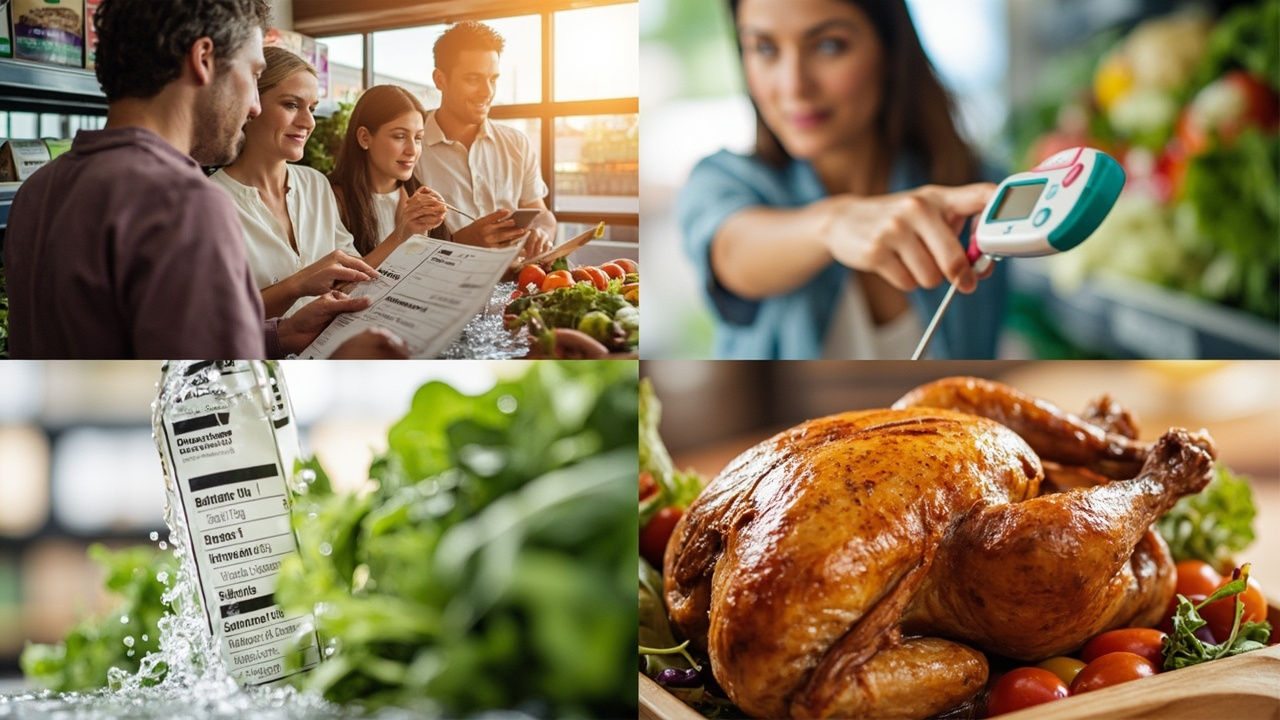
TL;DR: FDA's Human Foods Program uses social and behavioral science — including its 4,398-person 2019 Food Safety and Nutrition Survey and rapid recall surveys — to track how U.S. adults handle food, read labels, and respond to outbreak warnings.
What the food behavior research program studies
According to the FDA's page titled Social and Behavioral Science Research (Food), social and behavioral scientists in the Human Foods Program study perceptions and behaviors across food safety, nutrition, food labeling, food additives, food adverse events and recalls, biotechnology, dietary supplements, infant formula, and other food-related areas.
The same page explains why perception work matters for regulation. The findings help the agency understand how consumers and other stakeholders perceive and react to food safety risks, health and nutrition information, and FDA advice to consumers and industry. Improving home food safety practices or dietary choices requires expanding knowledge and changing attitudes and behavior, the agency notes, and the research helps target resources and increase the effectiveness of educational materials and regulatory programs.
The team is deliberately multidisciplinary. Researchers hold graduate degrees in psychology, sociology, agricultural economics, nutritional sciences, public health, and public policy. Their tool kit includes national probability surveys, experimental studies, focus groups, in-depth interviews, and social media listening, with the method chosen to fit the research question.
Two standing efforts organize much of the public output: the Food Safety and Nutrition Survey, known as FSANS, and the Research Program on Foodborne Illness Outbreaks and Food Recall Communications.
FSANS: FDA's premier consumer survey
According to the FDA's page titled 2019 Food Safety and Nutrition Survey Report, FSANS is the agency's premier national probability consumer survey for awareness, knowledge, understanding, and self-reported behaviors on food safety and nutrition topics. The findings are intended to support regulatory, policy, education, and other risk-management decisions aimed at promoting and protecting public health.
FSANS combined two earlier separate efforts, the Food Safety Survey and the Health and Diet Survey. The 2019 round used address-based sampling with a mail-push-to-web design, rather than the telephone interviews used in earlier years. The survey population was adults age 18 and older in the 50 states and the District of Columbia, with 4,398 responses collected during October and November of 2019.
Weighting and adjustment are central to how FDA presents the results. Frequencies were weighted to account for sampling design and non-response, with base weights adjusted using sample-frame information on Census region and single- or multi-unit housing, the number of adults per household, and demographic controls from the 2014-2018 five-year American Community Survey data for sex, age, race, Hispanic origin, education, Census region, and residence in a metropolitan area.
FDA released the results in March 2021 and later provided an interactive access point. According to the FDA constituent update titled FDA Releases Food Safety and Nutrition Survey Results, the agency released the FSANS Explorer web tool on November 9, 2021, after first announcing the 2019 results on March 16, 2021. The Explorer lets users examine relationships between survey answers and demographic characteristics, display answers through tables and charts, and perform statistical tests of response relationships.
Home versus restaurant risk perceptions
FSANS found a clear gap between perceived risk at home and in restaurants. Only 15% of respondents said it was very common for people to get food poisoning because of the way food is prepared at home, compared with 29% who said it was very common because of the way food is prepared in restaurants.
Expectations about contamination also differed sharply by food type. More respondents said raw chicken at 93% and raw beef at 66% were likely or highly likely to have germs than said the same about raw vegetables at 9% or fruit at 6%. That pattern matters for consumer education because produce can also carry pathogens along the farm-to-plate continuum, even when shoppers associate risk mainly with meat.
Awareness of specific organisms was uneven. Awareness was high for Salmonella at 97% and E. coli at 88%, but comparatively low for Campylobacter at 7% and Vibrio at 4%. For nutrition educators and food safety communicators, the contrast suggests that familiar pathogen names do not translate into broad microbiological literacy.
Hand washing and thermometer habits
Hand washing varied by moment rather than being a single habit. Consumers were more likely to report washing hands with soap after touching raw meat at 76% than before preparing food at 68% or after cracking raw eggs at 39%. The egg figure is especially relevant because cracking eggs is often treated as a clean task, while hands can transfer contamination to other surfaces and foods.
Thermometer ownership was common, but use depended on the dish. Sixty-two percent of respondents reported owning a food thermometer. Among owners who cooked the relevant food, reported use ranged from 85% for whole chickens and 79% for beef, lamb, or pork roasts down to 40% for chicken parts, 36% for burgers, 23% for egg dishes, and 20% for frozen meals.
The gradient points to a practical message for healthy home cooking: ownership alone does not ensure safe internal temperatures for thinner, smaller, or egg-based items. Roasts and whole birds prompt more thermometer checks, while burgers, parts, egg dishes, and frozen meals lag despite similar needs for temperature verification.
How shoppers use Nutrition Facts and menu calories
Label engagement was widespread. Eighty-seven percent of respondents had looked at the Nutrition Facts label on food packages. The four items consumers most often said they looked for were Calories, Total Sugar, Sodium, and Serving Size. Reported uses centered on judging how high or low a food is in items such as calories, salt, vitamins, or fat, getting a general idea of nutritional content, and comparing different foods with each other.
Package claims were also highly visible. More than 80% of respondents had seen claims such as No added sugar, Whole grain, Organic, Gluten-free, Low fat, No artificial ingredients, Low sugar, and No artificial colors. High exposure to front-of-package language helps explain why FDA pairs label education with work on claims, so shoppers can place marketing phrases alongside the standardized Nutrition Facts panel.
Restaurant menu labeling had reached most respondents by late 2019. Seventy percent reported seeing calorie information on menus and menu boards. Among those who had seen it, 53% reported using it, most often to avoid ordering high-calorie menu items. The finding links a policy intervention — visible calories at the point of choice — to a concrete reported behavior at ordering time.
Recall and outbreak communication research
According to the FDA page titled Research Program on Foodborne Illness Outbreaks and Food Recall Communications, social and behavioral scientists in the Human Foods Program lead a dedicated program to improve FDA communication during foodborne illness outbreaks and food recalls.
The program tested the templates FDA uses in fast-moving events. In July 2021, researchers conducted 36 online one-on-one in-depth interviews with U.S. consumers age 18 and older to test safety alert and outbreak advisory templates. Based on those findings, FDA updated its Outbreak Advisory template with more plain language, moved the product name and images to the top, and added concise bullets.
A second qualitative round followed in June 2023. Researchers held eight online focus groups of four to six participants each with U.S. adults to better understand experiences with food recalls and to gather feedback on the updated outbreak advisory template. FDA said it is using those findings to further strengthen outbreak advisory messaging.
Quick-turnaround surveys during active recalls
To collect data while a recall or outbreak is still evolving, the program built a survey questionnaire repository, or question bank, for quick-turnaround consumer surveys. Each survey is designed to take about 15 minutes, allowing 50 to 60 questions. Topics can include awareness and perception of the recall or outbreak, possession of recalled products and behaviors during the recall, emotions, information sources and trust, usual consumption of the implicated foods, demographics, and related covariates.
Data are collected through a consumer web panel operated by Dynata. The target sample is 1,200 respondents per survey, with quotas used to balance the sample to U.S. population demographics.
Three completed surveys illustrate the approach. A quick-turnaround survey on a frozen strawberries recall associated with a hepatitis A outbreak was fielded March 31 through April 5, 2023, with 1,234 U.S. adults. A survey on a flour recall associated with a Salmonella outbreak was fielded May 17 through May 21, 2023, with 1,208 U.S. adults. A survey on a cinnamon applesauce pouches recall associated with elevated lead levels was fielded November 17 through November 26, 2023, with 1,543 U.S. adults, including an oversample of 1,175 parents with young children ages 6 months to 8 years.
Why this evidence base matters for households
Taken together, the FSANS and recall-communication projects show how FDA connects everyday kitchen behavior to regulatory communication. National estimates on hand washing, thermometer use, label reading, and menu-calorie use give program planners a baseline, while interviews, focus groups, and rapid surveys reveal whether warnings are seen, understood, and acted upon.
For consumers, the practical threads are consistent: treat produce washing and egg handling as safety steps, use a thermometer beyond large roasts, compare package claims with the Nutrition Facts panel and serving size, and check outbreak advisories for product names, images, and action bullets when a recall affects the home.
Sources referenced
- Social and Behavioral Science Research (Food) | FDA (https://www.fda.gov/food/science-research-food/social-and-behavioral-science-research-food)
- 2019 Food Safety and Nutrition Survey Report | FDA (https://www.fda.gov/food/social-and-behavioral-science-research-food/2019-food-safety-and-nutrition-survey-report)