TL;DR: High daily intakes of dietary fiber, folate, magnesium, vitamin B6, vitamin C, vitamin D, and vitamin K were linked to lower high-sensitivity C-reactive protein in US adults.
Fiber, Magnesium Lead Nutrient Links to Lower Inflammation in US Adults
High daily intakes of seven nutrients were significantly associated with lower high-sensitivity C-reactive protein (hs-CRP) in a nationally representative analysis of US adults, with dietary fiber and magnesium showing benefit at usual recommended intakes, according to the Journal of the American Board of Family Medicine paper titled Daily Nutrient Intake and Inflammation Among US Adults.
The study, by Arch G. Mainous, Lu Yin, Frank A. Orlando and Aaron A. Saguil, was published on June 1, 2026, in the Journal of the American Board of Family Medicine. It used the National Health and Nutrition Examination Survey (NHANES) 2021–2023 to examine whether daily intake of nutrients described as purportedly anti-inflammatory was associated with current inflammation measured by hs-CRP.
For each nutrient, intake was categorized as low, moderate — a category that includes recommended intake — or high, and hs-CRP and dietary nutrient intake were examined with parametric and non-parametric statistics. High intake, compared with low intake, was linked to lower hs-CRP for dietary fiber, folate, magnesium, vitamin B6, vitamin C, vitamin D, and vitamin K. For dietary fiber and magnesium, the lower hs-CRP association was also present when moderate intake was compared with low intake.
The authors concluded that usual dietary intake of dietary fiber and magnesium indicates that they are anti-inflammatory. They concluded that folate and vitamins B6, C, D, and K appear to confer greater anti-inflammatory benefit only above recommended dietary levels. They wrote that dietary strategies emphasizing these nutrients may help individuals lower hs-CRP and potentially mitigate inflammation-related health risks.
Study Asked Whether Everyday Intake Tracks Current Inflammation
The research question was whether daily nutrient intake by US adults is associated with inflammation measured close in time to diet assessment. Systemic inflammation has long been associated with chronic disease and mortality, and dietary interventions have been proposed as a mechanism to decrease inflammation.
The investigators described inflammation as linked to development and progression of cardiovascular disease (CVD), cancer, diabetes and chronic kidney disease as well as mortality. They noted that many environmental factors can elevate inflammation and that inflammation is a likely target for prevention of chronic diseases besides CVD, including behavioral health conditions.
They also noted that hyperinflammation during an initial severe COVID-19 episode has been associated with increased downstream mortality risk from all causes. They noted that treatments suggested to decrease inflammation, such as corticosteroids, have negative outcomes over the long term, and that dietary and nutrition-based strategies have therefore been proposed by many authors.
A central design choice was translation to everyday eating. The authors wrote that it is difficult for consumers to apply clinical benefits of nutrients to diet because most study designs are not truly translational. They wrote that many studies supporting foods as anti-inflammatory provide evidence of biological plausibility but do not link data from human diets to clinical measures of inflammation.
How Researchers Tied Nutrition Facts Panel to Blood Marker
The analysis was a nationally representative secondary analysis of nutrient intake in US adults. Purported anti-inflammatory nutrient intake was quantified based on Daily Values (DVs) to make results relevant to the Nutrition Facts panel.
The Nutrition Facts panel on packaged foods shows percent Daily Value (%DV), a reference established by the United States Food and Drug Administration (FDA) to guide dietary consumption of key nutrients. The authors stated that what was unclear was whether nutrient intake of US adults is associated with inflammation when intake is standardized relative to DV.
The data came from NHANES 2021–2023 dietary survey and laboratory test datasets. NHANES employs a stratified, multistage probability sampling design to generate estimates representative of the noninstitutionalized US population. Detailed information on the 2021–2023 survey design, including the dataset analyzed, is available in NHANES documentation.
The 2021–2023 NHANES baseline included 4,963 participants aged 18 years and older, representing approximately 236 million US adults. All analyses were conducted using the survey package in R version 4.3.3 from R Foundation for Statistical Computing, which accounts for NHANES complex sampling design and provides population-level estimates.
Dietary intake came from the NHANES dietary interview component called What We Eat in America (WWEIA), conducted as a partnership between the US Department of Agriculture (USDA) and the US Department of Health and Human Services (DHHS). All NHANES participants are eligible for two 24-hour dietary recall interviews. Individual diets were translated into daily nutrient intakes, and hs-CRP was measured in close temporal proximity to dietary assessment.
The authors distinguished the approach from prior NHANES work. They wrote that prior studies examining anti-inflammatory potential of nutrient intake were limited in nutrients, did not standardize intake relative to DV, and used hematologic inflammatory indices that lack the established clinical relevance of hs-CRP as an inflammatory biomarker.
Seven Nutrients Linked to Lower hs-CRP at High Intake
High intake versus low intake was significantly associated with lower hs-CRP for seven nutrients. The reported comparisons were dietary fiber 2.7 versus 3.9, p=0.001; folate 3.3 versus 4.1, p=0.002; magnesium 2.8 versus 4.0, p=0.001; vitamin B6 3.4 versus 4.0, p=0.01; vitamin C 3.4 versus 4.0, p=0.04; vitamin D 1.3 versus 3.8, p=0.03; and vitamin K 3.1 versus 4.1, p=0.0001.
Dietary fiber showed the joint pattern of lower hs-CRP at high intake and a significant association when moderate intake was compared with low intake. Magnesium showed the same pattern, with significance both for high versus low intake and for moderate versus low intake.
The distinction matters because the moderate category includes recommended intake. The authors interpreted the fiber and magnesium findings as evidence that usual dietary intake indicates an anti-inflammatory association. For the other five nutrients with significant high-versus-low differences, the authors interpreted the benefit as appearing mainly above recommended dietary levels.
The paper stated that not all hypothesized nutrients showed significant associations with inflammation. It did not present those non-significant nutrients as anti-inflammatory in this population analysis. The results section focused significance reporting on the seven nutrients listed above.
The study examined hs-CRP and dietary nutrient intake with both parametric and non-parametric statistics. Intake categories of low, moderate and high were applied for each nutrient. The moderate group included recommended intake, allowing comparison of below-recommended, at-recommended, and above-recommended intake patterns.
Why Fiber and Magnesium Stood Apart
Fiber and magnesium were the only two nutrients for which the paper reported a significant low-to-moderate association in addition to the high-versus-low association. That structure supports the conclusion that usual intake levels were associated with lower inflammation for those two nutrients.
For folate and vitamins B6, C, D, and K, the reported significant comparison was high intake versus low intake. The authors concluded that those nutrients appear to confer greater anti-inflammatory benefit only above recommended dietary levels.
Vitamin K had the smallest reported p-value among the seven comparisons, at p=0.0001, for 3.1 versus 4.1. Dietary fiber and magnesium each had p=0.001. Folate had p=0.002. Vitamin B6 had p=0.01, vitamin D had p=0.03, and vitamin C had p=0.04.
Vitamin D showed the largest absolute difference in reported hs-CRP values, at 1.3 for high intake versus 3.8 for low intake. Dietary fiber showed 2.7 versus 3.9. Magnesium showed 2.8 versus 4.0. Folate showed 3.3 versus 4.1. Vitamin B6 and vitamin C each showed 3.4 versus 4.0. Vitamin K showed 3.1 versus 4.1.
The authors framed the implication as dietary strategies emphasizing these nutrients may help individuals lower hs-CRP and potentially mitigate inflammation-related health risks. The wording is conditional, describing a potential pathway rather than a proven treatment effect.
What An Anti-Inflammatory Eating Pattern Supplies
Practical guidance aligned with the study emphasizes more whole and minimally processed plant foods, including vegetables, fruits, beans, lentils, whole grains, nuts and seeds, according to Harvard Health Publishing in its May 27, 2026 article titled The comforting bowl that works quietly against inflammation.
That Harvard Health Publishing article describes healthy fats from sources like olive oil, nuts and avocados, and less red and processed meat, refined grains, and sugary or fried foods. It states that this way of eating supplies fiber, vitamins, minerals, and plant compounds called phytochemicals, and that many of these act as antioxidants and help dial down inflammatory processes that can contribute to disease.
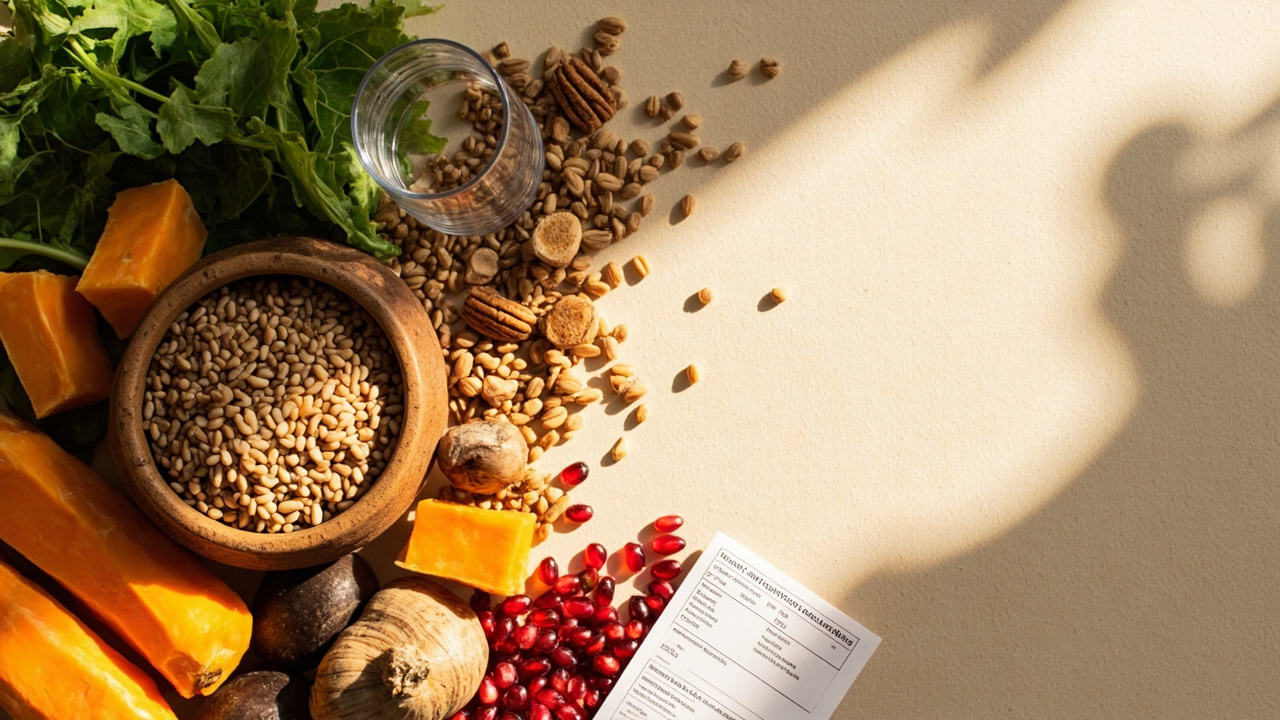
The same article presents a Nourish Lentil Bowl as an example meal combining foods linked with lower inflammation. It lists lentils as providing plant protein, fiber and minerals, and states that higher fiber intake has been associated with lower levels of inflammatory markers in blood. It lists winter squash as rich in beta carotene and vitamin C, mushrooms as studied for potential anti-inflammatory and immune-supporting effects, and pomegranate seeds as supplying vitamin C, fiber and phytochemicals such as anthocyanins and resveratrol.
It lists pecans and olive oil as offering unsaturated fats associated with a more favorable inflammatory profile. It lists leafy greens as adding fiber, folate and protective plant compounds. The recipe serves four and combines lentils cooked in vegetable broth and water with roasted winter squash, onion, mushrooms and garlic in olive oil, balsamic vinegar and Italian seasoning, topped with baby greens, pomegranate seeds and chopped pecans.
The overlap is direct for the JABFM findings: lentils, greens, pomegranate seeds and pecans supply dietary fiber; greens supply folate; and the bowl pattern supplies vitamin C, vitamin K and magnesium through vegetables, greens, lentils, nuts and olive oil. Consumers tracking intake can use %DV on the Nutrition Facts panel, the FDA reference used in the JABFM analysis, to compare low, moderate and high intake patterns.
Limits Readers Should Keep in View
The analysis was observational and population-level, using NHANES 2021–2023 data from 4,963 adults representing about 236 million US adults. Individual diets were translated into daily nutrient intakes from recall interviews, and hs-CRP was measured near the time of dietary assessment.
Foods identified as anti-inflammatory often contain multiple nutrients with professed anti-inflammatory properties, so linking any one nutrient in a supposedly anti-inflammatory food may promote the wrong nutrient, the authors wrote. They also wrote that many supporting studies show biological plausibility without linking human diet data to clinical inflammation measures.
The findings do not establish that increasing a single nutrient lowers hs-CRP for a specific person. The paper reports associations by intake category and p-values, not intervention outcomes. Not all hypothesized nutrients showed significant associations, underscoring that the results are nutrient-specific rather than a general endorsement of higher intake.
For people considering diet changes, the study points to fiber and magnesium at recommended intake levels and to folate, B6, C, D and K at higher intake levels as candidates for further dietary-strategy research. The Harvard Health Publishing meal example points to small sustainable shifts, such as making a lentil bowl once a week, swapping vegetables or greens by season, and pairing the bowl with unsweetened tea or coffee.
Sources referenced
- Daily Nutrient Intake and Inflammation Among US Adults | American Board of Family Medicine (https://www.jabfm.org/content/39/1/162211)
- The comforting bowl that works quietly against inflammation - Harvard Health (https://www.health.harvard.edu/healthbeat/the-comforting-bowl-that-works-quietly-against-inflammation)