TL;DR: Three infants in California, Pennsylvania and Washington developed infant botulism after consuming Nara Organics formula, prompting a nationwide recall on June 13, 2026.
Federal health officials confirmed on June 26, 2026 that a multistate outbreak of infant botulism remained at three laboratory-confirmed cases, with one infant ill in each of California, Pennsylvania and Washington. According to the Investigation Update on Infant Botulism Outbreak, June 2026 published by CDC, all three infants consumed Nara Organics Whole Milk Organic Powdered Infant Formula, were hospitalized, and no deaths were reported.
The pages titled Where People Got Sick: Botulism Outbreak, June 2026 and When People Got Sick: Botulism Outbreak, June 2026, both dated June 26, 2026, frame the event as an active investigation by CDC, the U.S. Food and Drug Administration, the Infant Botulism Treatment and Prevention Program, and public health officials in several states. The product at the center is recalled powdered infant formula, and the agency message is direct: do not feed infants Nara Organics Whole Milk Organic Infant Formula.
A company notice titled No New Cases CDC Update, published June 26, 2026 by Nara Organics, said the company had heard from CDC and FDA that evening that there had been no new cases and the case count remained at three.
Where the three cases were reported
One case in each of three states
The geographic pattern as described by June 26, 2026 is narrow but spread across the country. According to the Association of Food and Drug Officials summary of FDA's outbreak investigation, the multistate outbreak involved three confirmed or suspected infant botulism illnesses from three states: California, Pennsylvania and Washington.
Reporting by Food Engineering dated June 25, 2026 described the same distribution, stating that FDA and CDC, in collaboration with the California Department of Public Health's Infant Botulism Treatment and Prevention Program and state and local partners, were investigating three infant botulism illnesses in California, Pennsylvania and Washington.
A separate report in Food Poisoning Bulletin dated June 26, 2026 listed the case count by state as California (1), Pennsylvania (1) and Washington (1). That breakdown matches the federal description of three illnesses in three states.
The Washington link was reinforced at the state level. A Child Nutrition Services Special Update dated June 24, 2026 said CDC, FDA, the Washington State Department of Health, Thurston County and officials in two other states were investigating an outbreak linked to powdered infant formula produced by Nara Organics. The update noted that all reported cases involved infants who consumed Nara Organics powdered infant formula.
What location means in this investigation
Location in this event refers to where infants got sick, not where formula was made. According to Food Engineering, all of Nara Organics' formula was manufactured in Europe. The recalled formula was later described as distributed nationally across Target retail stores, Target.com and Nara.com between July 2025 and June 2026, and not distributed outside the United States.
That national distribution helps explain why illnesses in western and eastern states could be part of one investigation. Federal investigators described the event as multistate, even though the total remained at three cases as of June 26, 2026.
When infants got sick and who was affected
Illness onset in April through May 2026
Federal summaries place illness onset between April and May 2026. The Association of Food and Drug Officials summary quoted FDA and CDC information that the California Department of Public Health Infant Botulism Treatment and Prevention Program reported three toxin type A infections among infants consuming Nara Organics Whole Milk Organic Powdered Infant Formula with illness onset between April and May 2026.
Food Engineering also reported that illness onset occurred in April and May, and that all three cases included in the outbreak consumed Nara Organics-brand powdered infant formula. Food Poisoning Bulletin gave the same April through May 2026 range.
A CDC epidemiologic section visible in the investigation page history notes that no new cases had been added since the initial notice published on June 13, 2026, that all cases had been confirmed through laboratory testing, and that one illness onset date was corrected to May 20, 2026 instead of May 27, 2026.
Ages, hospitalization and treatment
All three infants were hospitalized. According to Food Poisoning Bulletin, all three infants were hospitalized and treated with BabyBIG, the FDA-approved treatment for this infection developed by the California Department of Health.
The same report said the infants ranged in age from 86 days to 153 days when they got sick. Federal and partner summaries also described the infants as under one year of age and, in one weekly outbreak summary, as between two and five months old.
No deaths were reported. That finding appears in Food Engineering, Food Poisoning Bulletin and the CDC investigation summary.
The infections were identified as toxin type A. The Association of Food and Drug Officials summary said the program reported three toxin type A infections among infants who had consumed the named formula.
Which formula was involved
Nara Organics Whole Milk Organic Powdered Infant Formula
The product named in every June account is Nara Organics Whole Milk Organic Powdered Infant Formula. According to the Association of Food and Drug Officials table of FDA recall information, the June 13, 2026 recall covered Nara Organics Whole Milk Powdered Infant Formula for potential risk of Clostridium botulinum contamination.
Food Engineering said FDA contacted Nara Organics on June 12 to notify it about the outbreak and recommended a recall because of severity and the epidemiologic signal. On June 13, Nara Organics agreed to recall all of its Whole Milk Organic Powdered Infant Formula on the market.
The company described the action as voluntary and covering all formula on the market. A Nara Organics statement quoted by Food Engineering said, “We sincerely apologize for the concern and distress this announcement causes our customers.” The same statement said the company was committed to transparency and accountability while working to identify further information.
How the cans were described and where they were sold
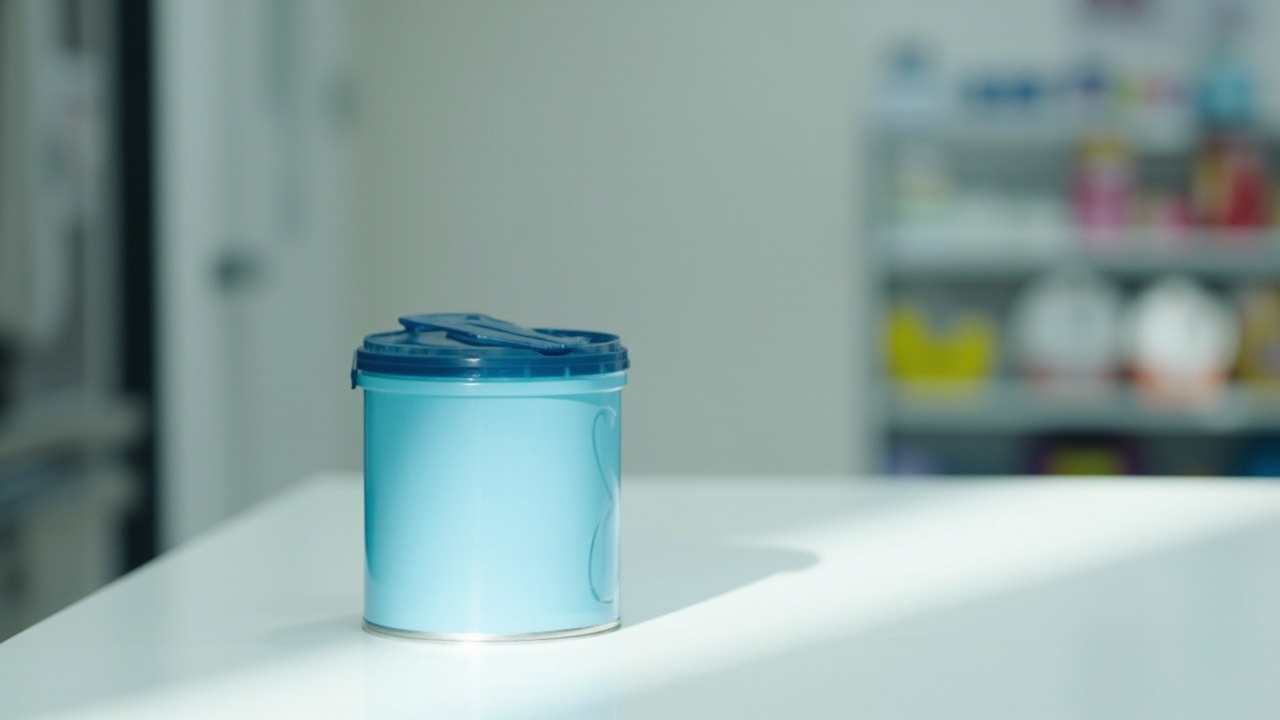
Food Poisoning Bulletin described two recalled package sizes. It said Nara Organics Whole Milk Infant Formula was packaged in 700 gram light blue cans with a dark blue lid and a drawing of cows on the front, with UPC number 860013251901, and the same product in a 400 gram can with UPC number 860013251918.
The report said the formula was sold in Target stores, on Target.com and Nara.com between July 2025 and June 2026, and was not sold outside the United States. Food Engineering gave the same national distribution description and the same July 2025 to June 2026 sales window.
The Washington State update also said the recalled formula was sold nationwide through Target stores, Target.com and Nara.com. It advised people who purchased it not to use it and to throw it away or return it to where it was bought.
Why investigators linked the illnesses to formula
Epidemiologic signal
The link as of late June rested on epidemiology. According to the Association of Food and Drug Officials summary, all three cases included in the outbreak consumed Nara Organics-brand powdered infant formula. Food Engineering likewise said all three cases consumed that brand.
FDA's recommendation for a recall was based on severity and the epidemiologic signal, according to Food Engineering. That step came on June 12, one day before the company agreed to the market-wide recall.
Leftover product testing still pending in late June
Officials in two states collected leftover infant formula for testing, according to Food Engineering. That testing was underway, with results expected in the coming weeks.
Food Poisoning Bulletin also said FDA was testing the formula and that results would take a couple of weeks. It said that to that date, Nara infant formula had not tested positive for Clostridium botulinum, while the company was voluntarily recalling all products then in market based on early epidemiologic evidence.
The three lots the sick infants consumed were listed in Food Poisoning Bulletin as 709125280E14F2, 709125288E14F2 and 708125174E14F2. The same report listed additional lot codes on the bottom of cans covered by the all-lots recall.
Supply chain and facility findings known by June 26
Same milk and drying suppliers as 2025 ByHeart outbreak
By June 26, FDA had traced the implicated lots to common suppliers. According to Food Engineering, FDA determined that the Nara Organics infant formula lots linked to illnesses were made with milk supplied by Organic West Milk and spray dried by Dairy Farmers of America.
Those were the same suppliers of organic whole milk and organic whole milk powder from the outbreak linked to ByHeart Powdered Infant Formula in November 2025, according to the same report. FDA said there was not enough evidence to determine if that was the source or route of contamination.
Food Safety Magazine reporting dated June 23, 2026 said that between October 2024 and April 2025, Nara Organics was using the same whole milk supplier as ByHeart: Organic West milk dried by Dairy Farmers of America at its Fallon, Nevada facility. It quoted Dairy Farmers of America explaining that it did not supply whole milk powder directly to Nara Organics, and that a Nara supplier used the Fallon facility to process a portion of its organic milk supply into a powder ingredient.
Incomplete customer list and European plant inspections
FDA said it had conducted a traceforward investigation during the 2025 outbreak to determine whether Organic West Milk supplied milk to other powdered infant formula makers, according to Food Engineering. The agency said Organic West Milk provided an incomplete customer list that did not indicate milk was supplied to makers of Nara Organics formula. As part of the current investigation, Organic West Milk informed FDA that the earlier customer information was incomplete and should have included suppliers to Nara Organics.
Separately, FDA said that before learning of the illnesses, it inspected the two firms in Europe that manufacture Nara Organics Whole Milk Organic Infant Formula. According to Food Engineering, observations citing deficiencies were issued to both facilities at the close of both inspections. Both firms submitted corrective action responses to FDA, which were under review as of the June update.
What parents were told to do
Do not use recalled formula
The core nutrition and feeding guidance was consistent across sources. CDC's June 26, 2026 key points said not to feed infants Nara Organics Whole Milk Organic Infant Formula, which was recalled.
The Washington State update said if people recently purchased Nara Organics formula, they should not use it, and should throw it away or return it to where it was bought. It added that people who still had the container should record the lot number before discarding it.
For open containers, the same update referred readers to CDC recommendations and advised washing items and surfaces that may have touched recalled formula using hot, soapy water or a dishwasher.
Symptoms to watch and when to seek care
CDC described infant botulism as a rare but serious illness that can happen when a baby swallows spores of Clostridium botulinum bacteria. According to CDC's June 26 key points, illness often starts with constipation but is usually first noticed as difficulty feeding with trouble sucking and swallowing, a weak or altered cry, and loss of muscle tone.
The Washington State update listed poor feeding, loss of head control, muscle weakness, difficulty swallowing and decreased facial expression as symptoms warranting immediate medical care if an infant consumed the formula. It said symptoms can take as long as several weeks to develop and most commonly affect babies less than 6 months of age, and advised parents and caregivers whose infants consumed recalled formula to continue monitoring.
Food Poisoning Bulletin listed vomiting, diarrhea, constipation, poor feeding, drooping eyelids and weak crying as symptoms to monitor, and said any infant with these symptoms needs immediate medical care.
Sources referenced
- Investigation Update on Infant Botulism Outbreak, June 2026 | Botulism | CDC (https://www.cdc.gov/botulism/outbreaks-investigations/infant-formula-june-2026/investigation.html)
- Where People Got Sick: Botulism Outbreak, June 2026 | Botulism | CDC (https://www.cdc.gov/botulism/outbreaks-investigations/infant-formula-june-2026/locations.html)