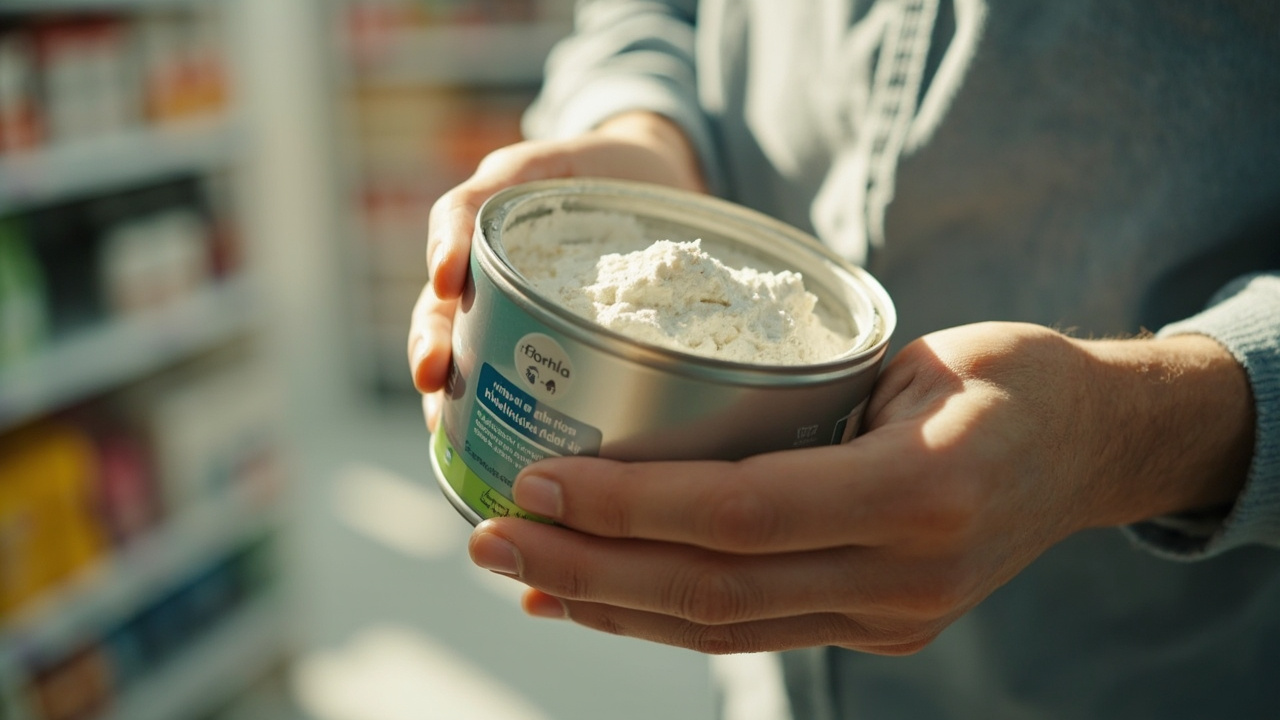
TL;DR: Nara Organics voluntarily recalled all lots of its Whole Milk Organic Powdered Infant Formula after three hospitalized infant botulism cases in California, Pennsylvania and Washington, prompting new scrutiny of premium organic marketing.
Three hospitalizations triggered nationwide recall
As of June 13, 2026, three cases of infant botulism had been identified in infants who had been fed Nara Organics formula, with one case each in California, Pennsylvania and Washington, according to the South Dakota Health Alert Network communication republished by SDAHO.
The infants ranged in age from 86 to 153 days, with the earliest illness onset reported in April 2026, that alert stated. All three were hospitalized and treated with BabyBIG, and no deaths were reported.
Nara Organics has voluntarily recalled all lots of its Whole Milk Organic Powdered Infant Formula, according to the Connecticut Department of Consumer Protection recall notice. The department identified the affected products as 700-gram cans with UPC 860013251901 and 400-gram cans with UPC 860013251918, with lot numbers printed on the bottom of each can.
The recall covers product sold nationwide through Target stores, Target.com and Nara.com, according to the June 24, 2026 Child Nutrition Services update from the Washington Office of Superintendent of Public Instruction. San Diego County health officials said the sales period ran from July 2025 through June 2026, as reported by KPBS Public Media.
Investigators listed by that Washington schools update include the Centers for Disease Control and Prevention, the Food and Drug Administration, the Washington State Department of Health, Thurston County and officials in two other states. The update said all reported cases involved infants who consumed Nara Organics powdered infant formula.
What infant botulism looks like and when it appears
Infant botulism occurs when ingested Clostridium botulinum spores germinate in the colon rather than through ingestion of preformed toxin, according to the SDAHO-republished health alert. The alert said it can take up to 30 days from exposure to develop signs and symptoms.
County officials told KPBS Public Media that the illness occurs when bacteria grow in a baby's intestines and produce a toxin that can cause muscle weakness and trouble breathing if not treated properly. The Connecticut consumer-protection notice described infant botulism as a serious threat to infants that can be potentially fatal.
Reported symptoms include constipation, poor feeding, ptosis or drooping eyelids, sluggish pupils, flattened facial expression, diminished suck and gag reflexes and weak or altered cry, according to the SDAHO-republished alert. If untreated, the disease can lead to progressive flaccid paralysis that can cause difficulty breathing and respiratory arrest, the same alert said.
KPBS Public Media listed constipation, poor feeding, weak crying, loss of head control and trouble swallowing, with symptoms able to appear three to 30 days after exposure. The Washington schools update listed poor feeding, loss of head control, muscle weakness, difficulty swallowing and decreased facial expression, noting symptoms can take several weeks to develop and most commonly affect babies younger than 6 months.
A premium pitch built on organic and whole milk
Nara launched last year as a premium alternative to market leaders Similac and Enfamil, backed by celebrity investors including Serena Williams, Gina Rodriguez and Nicky Hilton, according to the Minnesota Star Tribune. Target began carrying Nara Organics in January, promoting it among products aimed at parents seeking gentler, smarter wellness options, the newspaper reported.
Nara Organics and ByHeart are part of an emerging wave of premium brands that promise more natural formulations, according to the Minnesota Star Tribune. Many emphasize organic ingredients, whole milk and European-style formulations, appealing to parents willing to pay more for products they believe are healthier, the report said.
Actor and writer Erin Foster called Nara the cleanest formula when announcing her investment, while Williams described her backing as both an investment and a statement, according to the Minnesota Star Tribune. The company's website said the recalled formula, manufactured in Germany with ingredients from the United States and European Union, undergoes thousands of tests before reaching consumers, the newspaper reported.
Target said in a statement quoted by the Minnesota Star Tribune: "At Target, we care deeply about the safety of our guests and products, and we require our vendors to comply with all applicable federal, state, and local requirements."
University of Minnesota professor of food science and nutrition Joanne Slavin told the Minnesota Star Tribune: "It's your choice to use organic, but organic doesn't always mean better for you." She said attributes such as organic certification or milk from grass-fed cows may appeal to parents but do not necessarily translate into meaningful nutritional advantages for infants, according to the same report.
Slavin also said: "Everybody wants to be as natural and as close to the soil as possible." She added: "But processing for infant formula is absolutely critical. These things really have to be formulated like drugs. It's that important."
Two recalls in less than a year
ByHeart recalled its infant formula last fall, pointing parents to Nara Organics as a similar alternative, according to the Minnesota Star Tribune. Nara is now facing its own recall after three confirmed cases of botulism in infants who had been fed the product, the newspaper reported.
ByHeart recalled its formula about seven months ago after dozens of infants in several states became ill, including three in Minnesota, according to the Minnesota Star Tribune. The company promoted itself as offering better science, better ingredients and better safety and, like Nara, used whole milk in its formula, the report said.
The ByHeart outbreak involved 48 infants in 17 states from November 2025 through early 2026 before federal officials declared it over on February 26, according to PhillyVoice. Health officials first thought illnesses began in August 2025 but later found some cases dating back to 2023, PhillyVoice reported.
After pulling its products, ByHeart offered a 20% discount code in an Instagram post promoting Nara for parents still needing formula, according to the Minnesota Star Tribune. A ByHeart spokesperson said the post remained online after the promotion ended but was removed following Nara's recall, the newspaper reported.
The spokesperson said: "We do not have information about Nara's investigation and will not speculate on that situation." The spokesperson added: "ByHeart and Nara are separate companies with no corporate, financial, contractual, operational or manufacturing relationship."
A Nara spokeswoman declined to answer questions about ByHeart's recommendation and possible ties between the companies, according to the Minnesota Star Tribune. In website and Instagram statements, Nara said it is working closely with the FDA, CDC and state partners to determine the root cause of the outbreak, the newspaper reported.
Shared milk powder history draws attention
For a time, both brands used Organic West milk processed at a Dairy Farmers of America facility, according to Food Safety Magazine. Between October 2024 and April 2025, Nara Organics was using the same whole milk supplier as ByHeart: Organic West milk dried by Dairy Farmers of America, the magazine reported.
Nara said it purchased whole milk from Organic West, a U.S. organic whole milk supplier, from October 2024 to April 2025, and that milk was turned into powder at Dairy Farmers of America in Nevada, according to the company's whole-milk supply chain page. Nara said many dairy brands, including infant formula manufacturers, process whole and nonfat milk-based ingredients at that dryer.
Nara said it registered Organic West with the FDA as a supplier in 2024 and registered a new European Union dairy supplier in July 2025, according to that supply-chain page. Since July 2025, it has been sourcing whole milk from a European Union organic dairy, which it described as rare in also holding U.S. Department of Agriculture organic certification, the page said.
Making infant formula takes almost a year from purchase order to formula that customers purchase, according to Nara's supply-chain page. The company said its most recent batches made with its European dairy source were not yet available for sale at the time of its voluntary recall.
DFA told Food Fix, as quoted by Food Safety Magazine: "DFA does not supply whole milk powder directly to Nara Organics or any other infant formula manufacturers." The organization said a Nara supplier used DFA's Fallon, Nevada, facility to process a portion of its organic milk supply into a powder ingredient, which Nara then purchased and combined with other ingredients for further processing into finished formula.
Nara said its assessment determined that its formula could stay on the market at that time, based in part on testing data, according to its supply-chain page. It said it confirmed that the whole milk powder used in its formula did not overlap with lots of whole milk powder used by ByHeart in its infant formula.
Food Safety Magazine reported that ByHeart is manufactured in-house at domestic facilities, while Nara Organics is manufactured by German company Milchwerke Mittelelbe GmbH, a subsidiary of the Kruger Group. By the time the Nara outbreak was identified in June 2026, the brand and its manufacturer had begun using a European Union-based organic dairy supplier, the magazine reported.
Testing claims become central question
Nara highlighted use of sulphite-reducing clostridia enumeration at specifications ten times stricter than those recommended by the International Commission on Microbiological Specifications on Food, according to Food Safety Magazine. Nara described that method as a gold-standard Clostridium botulinum testing protocol recommended by the commission.
On its supply-chain page, Nara said the commission sets a suggested maximum level of less than 100 colony-forming units per gram for sulphite-reducing clostridia. Nara said all of its results across every batch were at or below 10 colony-forming units per gram, which it described as at least 10 times lower and as the limit of detection for the screening.
New findings from the ByHeart investigation suggest that enumeration may not be sufficient to ensure powdered infant formula is free of C. botulinum, according to Food Safety Magazine. The magazine said that method did fail to catch contamination in Nara's ingredients, process or final product.
FDA investigators identified C. botulinum in a powdered milk ingredient during the ByHeart investigation and matched isolates from a DFA facility to isolates from a clinical case and a finished formula sample, according to Food Safety Magazine. The agency said it has so far been unable to identify the root cause or additional explanatory factors, with work still ongoing.
Until now, C. botulinum has not been considered a hazard reasonably likely to occur in powdered infant formula manufacturing, according to Food Safety Magazine. Nara said that, to date, there have been no positive tests or evidence of C. botulinum in its formula supply chain, and that FDA has not yet determined a root cause of the ByHeart outbreak, according to its supply-chain page.
The Pennsylvania lawsuit alleges Nara did not test directly for the contaminant and instead screened for other microbiological parameters, according to PhillyVoice. Nara's website says it tests for 13 microorganism parameters, despite only two being FDA-mandated, PhillyVoice reported.
Lawsuit challenges FDA vetting language
A Yardley family filed suit in federal court in Philadelphia after their 2-month-old was among the three hospitalized infants, according to PhillyVoice. The parents, Erica and Micky Goldfin, said their child began showing poor feeding, weak cries and difficulty swallowing in early May, was admitted to Children's Hospital of Philadelphia on June 1, spent two nights in intensive care and was discharged June 6, PhillyVoice reported.
The family said it used Nara Organics starting a few days after birth, buying product at a Target in Langhorne and through an online order picked up in Princeton, New Jersey, according to PhillyVoice. None of Nara's products have tested positive for Clostridium botulinum so far, but the company issued the recall as a precaution, while officials are testing leftovers from two cases with results expected in coming weeks, PhillyVoice reported.
The filing alleges Nara misled customers with claims about FDA approval, including that it is the only USDA-certified organic infant formula made with whole milk and contains more milk fat than other formulas, according to PhillyVoice. The suit alleges the company claimed a special FDA designation for that higher milk-fat level, while FDA does not issue premarket approvals for infant formulas, PhillyVoice reported.
The lawsuit states: "Those representations conveyed a false assurance that the Formula had received governmental safety vetting that it had not in fact received." It adds: "The representations were false or materially misleading, and Plaintiffs justifiably relied upon them in deciding to purchase the Formula and to feed it to (the baby)."
Nara's website says it held a clinical trial and that FDA had to review results before launch, according to PhillyVoice. The suit also cites a March 2023 FDA call-to-action letter about possible formula hazards including infant botulism, PhillyVoice reported.
A company spokesperson told PhillyVoice: "Nara Organics initiated a voluntary recall of its infant formula out of an abundance of caution and continues to work closely with the FDA, CDC, and state health authorities as the investigation continues." The spokesperson added: "Because this matter is the subject of ongoing litigation, we are unable to comment further at this time other than to say we intend to defend the company against the unfair and misleading allegations made in the case."
Marler Clark separately filed suit on behalf of a Pennsylvania infant, alleging Nara sold whole-milk formula when botulism risk in powdered whole milk had been documented by regulators and shown by the ByHeart outbreak, according to Food Safety Magazine. The firm alleges Nara marketed powdered whole milk as premium while not disclosing it as a hazard, citing a 2023 FDA letter identifying whole milk powder as a potential vehicle because spores can survive pasteurization and spray-drying, the magazine reported.
What households and clinicians should do now
Caregivers with recalled formula should stop using it immediately, according to the Connecticut Department of Consumer Protection recall notice. If an infant recently consumed the formula and develops respiratory difficulty, poor feeding or altered cry, seek immediate medical attention, the department said.
If parents still have an opened container, federal officials advise photographing or recording the brand and lot number, sealing and labeling the container do not use, and storing it for 30 days in case testing is needed, according to KPBS Public Media. The SDAHO-republished alert said to record the lot number and use-by date before discarding, consider retaining opened formula for possible later testing if symptoms develop, label it DO NOT USE, store it away from other feeding items for at least a month, and discard it if no symptoms appear after a month.
The Washington schools update advised throwing the product away or returning it where purchased, recording the lot number if the container remains, and washing items and surfaces that may have touched the formula with hot soapy water or a dishwasher. San Diego County staff are working with local stores to remove the product from shelves, according to KPBS Public Media.
Refund rules depend on purchase channel, according to the Connecticut Department of Consumer Protection recall notice. Purchases from the Nara Organics website between May and June 2026 will receive an automatic refund, consumers with unused formula from before May 2026 may submit a photo of the can and use-by date through the company website, and Target buyers may return the product locally or follow online return instructions.
Providers should maintain heightened suspicion for infant botulism in any infant with compatible symptoms who was fed Nara Organics Whole Milk Organic Powdered Infant Formula, according to the SDAHO-republished alert. It also said providers should ask which formula brand infant patients receive, alert parents and guardians to the recall, and ensure recalled formula is not consumed.
Sources referenced
- Two formula recalls raise doubts about booming ‘better-for-you’ category - Minnesota Star Tribune (https://www.startribune.com/two-formula-recalls-raise-doubts-about-booming-better-for-you-category/601857978)
- Recall Notice: Nara Organics Issues Voluntary Recall of Powdered Infant Formula - Connecticut Department of Consumer Protection (https://portal.ct.gov/dcp/news-releases-from-the-department-of-consumer-protection/2026-news-releases/recall-notice-nara-organics-issues-voluntary-recall-of-powdered-infant-formula)