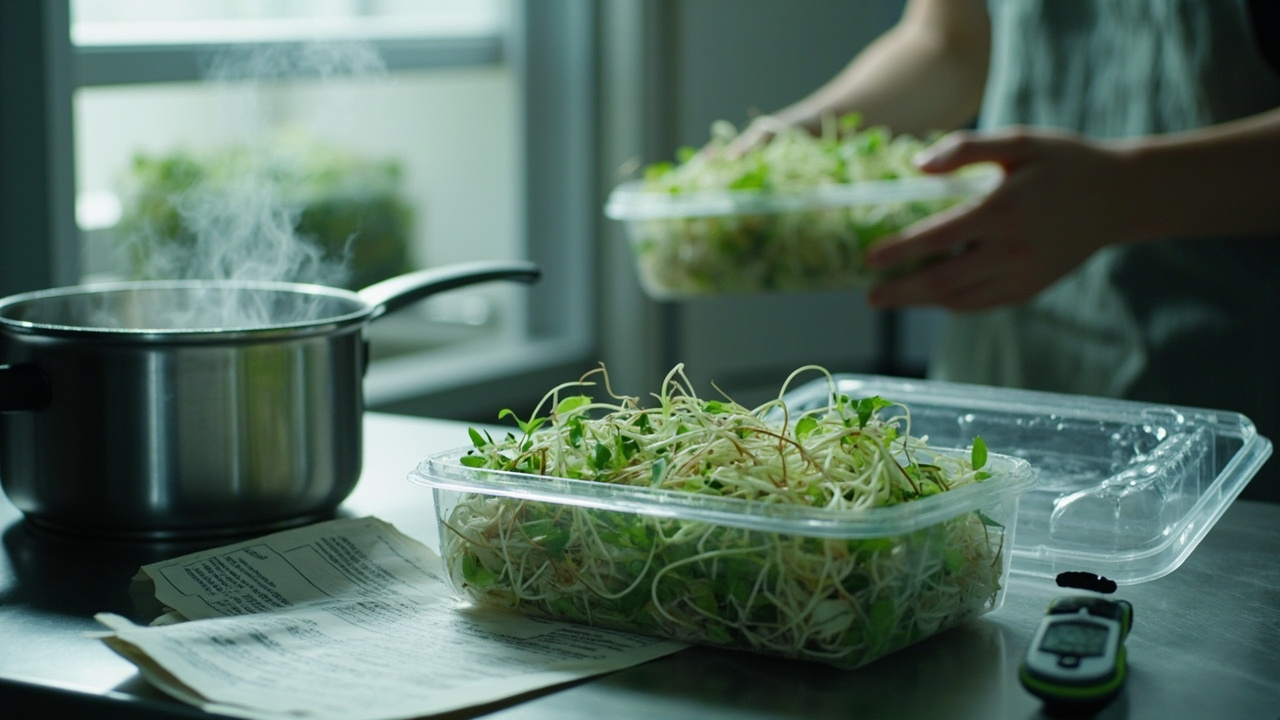
TL;DR: The CDC closed a multistate E. coli and Salmonella outbreak traced to alfalfa sprouts and one seed lot on November 9, 2026, after 77 people in 16 states fell ill, six were hospitalized and none died.
Federal food safety officials have finished their investigation into an outbreak that reached 16 states, and the sprouts at its center are past their best-by dates. The seed that grew them is not.
The Centers for Disease Control and Prevention declared the outbreak over on November 9, 2026, and the Food and Drug Administration marked its own investigation complete the same day, according to the agencies' outbreak pages. Both agencies linked the illnesses to alfalfa sprouts and to seed lot SAL2-24JB, which carries an expiration date of December 31, 2029 — so recalled seed can still sit in home pantries and grower inventories.
How large was the outbreak?
CDC's final count lists 77 infections across 16 states, six hospitalizations and no deaths. Sixty-four people were infected with E. coli, 10 with Salmonella, and three carried both.
The outbreak was unusual in involving several organisms at once: Shiga toxin-producing E. coli serotypes O26:H11, O103:H25 and O168:H8, plus Salmonella Agona. Illnesses began between May 31 and October 19, 2026, according to the CDC's closing update.
The tally moved through the fall. A CDC media alert on August 21, 2026, reported 55 illnesses in 15 states, four hospitalizations and two people infected with both pathogens. An October 1 investigation update listed 76 cases — 64 E. coli and nine Salmonella — with onsets through September 7. The final count added one Salmonella case and extended the illness window to October 19. CDC's October 1 update described patients aged 12 to 94, with a median age of 37.
What connected the cases to one seed lot
PulseNet, CDC's national surveillance system for foodborne bacteria, flagged the outbreak in July 2026. Whole-genome sequencing showed that bacteria from sick people's samples were closely related, pointing to a shared food source.
Traceback work at Minnesota and Wisconsin restaurants identified alfalfa sprouts distributed by Everything Sprouts as a source of illness, CDC reported. FDA then traced the illnesses to a single lot of alfalfa seeds from a common supplier.
Interview data reinforced the link. Of 50 people interviewed as of October 1, 40 — 80% — reported eating sprouts, and 35 named alfalfa sprouts specifically. CDC compared that with the FoodNet Population Survey, in which 8.7% of respondents reported eating any sprouts, including alfalfa, bean or clover.
Seven illness clusters — two or more unrelated people who ate or shopped at the same place — were identified in Minnesota and Wisconsin, with alfalfa sprouts the most commonly reported food.
Sequencing also produced a resistance signal. Salmonella from 12 patients' samples was predicted to resist at least three of five antibiotics: azithromycin, fosfomycin, streptomycin, sulfisoxazole and tetracycline. CDC said most Salmonella infections resolve without antibiotics but that predicted resistance could limit common options. E. coli isolates from 64 samples showed no predicted resistance; CDC notes antibiotics are not recommended for Shiga toxin-producing E. coli.
Reported cases understate the reach. Food Safety News noted on November 10 that CDC estimates 29 undetected Salmonella cases for every one identified, and 26 for E. coli.
Which products were recalled
Everything Sprouts, LLC, recalled certain lots of alfalfa sprouts on August 22, 2026, sold under the Calco and Everything Sprouts brands at retailers and grocery stores. On August 28 the company widened the recall to certain lots of Robust Radish Sprout Mix because of cross-contamination risk from the alfalfa sprouts.
Seed reached consumers directly, too. Berlin Seeds-branded Alfalfa Sprouting Seed sold at the company's Millersburg, Ohio, store and website between February 13 and August 23, 2026, went to customers in states including Alaska, California, Florida, New York, Texas and Wyoming, according to FDA.
Lot SAL2-24JB shipped to sprout growers and wholesale distributors in California, Florida, Hawaii, Illinois, Massachusetts, Minnesota, Missouri, Montana, New York, Ohio, Oregon, Pennsylvania, South Carolina, Tennessee, Texas and Utah, plus Puerto Rico. FDA reported international distribution to Canada, Mexico, Tahiti and Venezuela. CDC said the seed supplier recalled the lot, and a second supplier also recalled it.
What consumers should do
Recalled sprouts are past their best-by dates and should no longer be sold, but the seed lot carries an expiration date of December 31, 2029. FDA advised growers to check inventory for SAL2-24JB and dispose of remaining seed, and urged households to check refrigerators and freezers, discarding products or returning them to the store.
If a frozen product has lost its packaging and can't be identified, FDA's guidance is to throw it out. Surfaces and containers that touched recalled seed or sprouts should be cleaned and sanitized. Anyone who ate recalled sprouts and develops symptoms should contact a health care provider.
CDC's guidance treats sprouts as a recurring hazard when served raw or only lightly cooked, and advises heating them until they are steaming hot to cut the risk.
The agency's four food-safety steps apply: clean hands, utensils and surfaces; keep food that won't be cooked apart from raw meat, poultry and seafood; use a thermometer to confirm cooking temperatures; and refrigerate perishables within two hours, or one hour when food has been exposed to temperatures above 90°F.
Symptom timing differs by pathogen. CDC says E. coli symptoms usually begin three to four days after exposure and most people recover in five to seven days, though some develop hemolytic uremic syndrome, a kidney complication that requires hospitalization. Salmonella symptoms typically appear six hours to six days after exposure, with most people recovering in four to seven days. Children under 5, adults 65 and older, and people with weakened immune systems face higher risk of severe illness.
What the closure does not settle
The investigation is finished, but the seed supplier's name is still not public. Food Safety News reported on November 10 that FDA knows the supplier's identity and has declined to disclose it, publishing only the lot number and expiration date.
Recalls continued after the closing announcement. Food Poison Journal reported on November 11 that two more actions tied to the seed lot had surfaced the day before, naming Country Creek Acres alfalfa sprout seeds sold online and Francisco Family Foods hydroponically grown alfalfa sprouts distributed in Montana.
Recalled sprouts have left store shelves, but seed with a 2029 expiration date may still be in a kitchen cabinet.