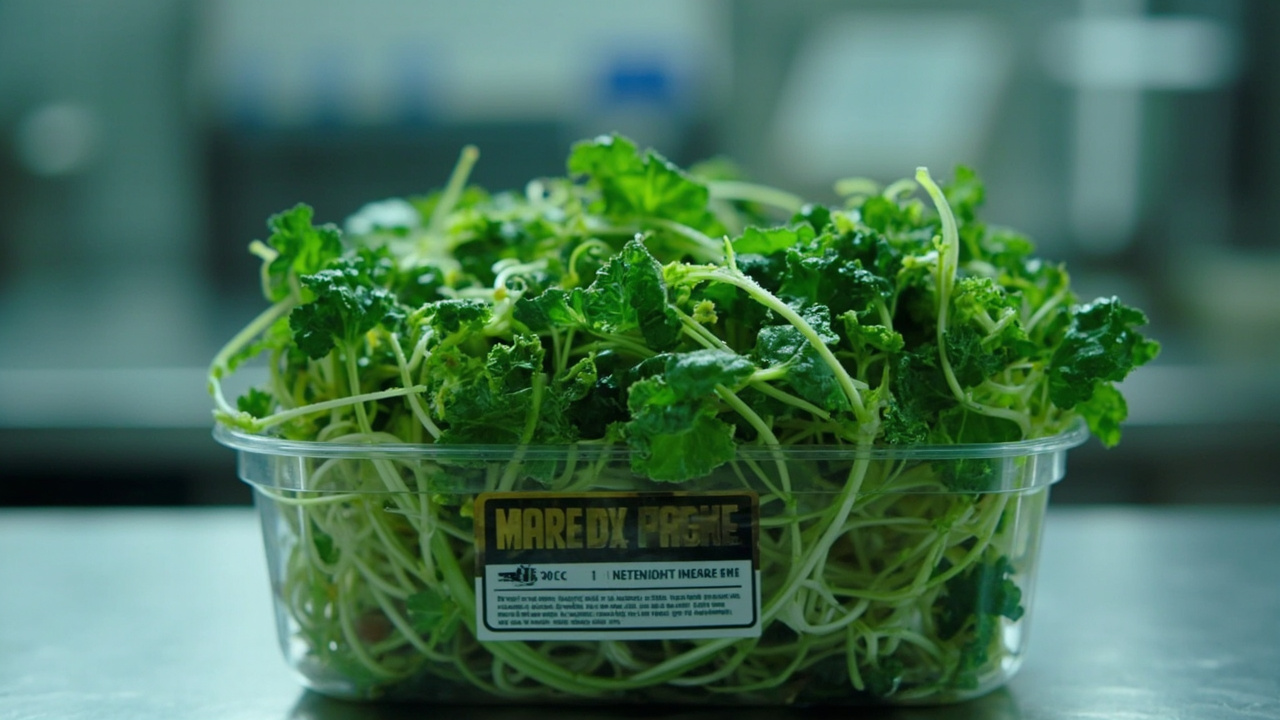
TL;DR: Do not eat, serve, or sell recalled broccoli sprouting seeds linked to a multistate Salmonella Bovismorbificans outbreak, according to the FDA's Outbreak Investigation of Salmonella: Sprouts (September 2026).
The U.S. Food and Drug Administration (FDA) says its investigation is ongoing and advises consumers, restaurants, and retailers not to use recalled lots of broccoli seeds.
The newest verified action, posted October 9, 2026, is a recall by Gardeners Basics of Spanish Fork, Utah, for one-pound bags of broccoli sprouting seeds, according to the FDA's Outbreak Investigation of Salmonella: Sprouts (September 2026).
Outbreak at a glance
Federal investigators describe a multistate outbreak of Salmonella Bovismorbificans infections linked to broccoli sprouts and microgreens grown from a contaminated seed lot.
The FDA lists total illnesses at 32, with 3 hospitalizations, 0 deaths, and last illness onset on September 3, 2026.
Cases were reported from six states: ID, MN, MT, OR, UT, and WA. Product distribution is listed as nationwide.
The FDA states this outbreak is being investigated separately from the shiga toxin-producing E. coli and Salmonella outbreak linked to alfalfa sprouts.
The Centers for Disease Control and Prevention (CDC), in its Investigation Update: Salmonella Outbreak, September 2026, reports the same case total and notes the true number of sick people is likely much higher than reported because many people recover without medical care and are not tested.
Who got sick and when
Illnesses started on dates ranging from July 7, 2026, to September 3, 2026, according to the FDA's Outbreak Investigation of Salmonella: Sprouts (September 2026).
Of 27 people interviewed, 26 — or 96% — reported eating sprouts or microgreens. Twenty-two reported specifically eating broccoli sprouts, and one reported eating a microgreen mix containing broccoli microgreens.
The CDC's Investigation Update: Salmonella Outbreak, September 2026 provides additional demographic detail for people with available information.
Ages ranged from 2 to 87 years, with a median age of 52 years among 29 people. Among 32 people, 53% were female and 47% were male.
Among 26 people with race information, 96% were White and 4% were Asian. Among 26 people with ethnicity information, 92% were non-Hispanic and 8% were Hispanic.
State and local officials asked about foods eaten in the week before illness. The CDC compares the 96% sprout exposure to 8.7% of respondents who reported eating any sprouts, including alfalfa, bean, or clover, in the FoodNet Population Survey.
How laboratory testing linked seeds and sprouts
The FDA says it collected and analyzed a sample of seeds from the seed supplier identified in the investigation.
That seed sample tested positive, and whole genome sequencing (WGS) analysis showed it matched the same Salmonella Bovismorbificans strain that made people sick in this outbreak.
As a result, the seed supplier conducted a recall of the implicated seed lot and contacted customers, according to the FDA's Outbreak Investigation of Salmonella: Sprouts (September 2026).
Public health investigators are using the PulseNet system to identify illnesses that may be part of the outbreak. The CDC explains that PulseNet manages a national database of DNA fingerprints of bacteria that cause foodborne illnesses.
DNA fingerprinting is performed using WGS. The CDC states WGS showed bacteria from sick people's samples are closely related genetically, suggesting people got sick from the same food.
Officials in Montana collected an unopened package of broccoli sprouts from a sick person's home, and WGS showed it is the same outbreak strain.
Officials in Washington State collected and tested samples of broccoli sprouts from a local food co-op and a sick person's home. Both sprout samples tested positive, and WGS showed they are the same strain that made people sick, according to the CDC's Investigation Update: Salmonella Outbreak, September 2026.
Which sprouts were recalled first
On September 10, 2026, Evergreen Fresh Sprouts LLC recalled 215 cases of broccoli sprouts.
The company announcement, posted as Evergreen Fresh Sprouts LLC Recalls Broccoli Sprouts Because of Possible Health Risk, says the firm is located in Moyie Springs, Idaho.
The recall covered 215 cases, with six 4-oz bags per case. The broccoli sprouts were packaged in clear plastic 4-oz zip lock bags with UPC code 8 38796 00105 1.
Affected Use By dates were 9/07/26, 9/09/26, 9/11/26, 9/14/26, and 9/16/26.
The sprouts were delivered to three distributors in Washington between August 24, 2026, and September 2, 2026, and may have been further distributed and sold in retail stores to consumers in ID, MT, and WA.
The company said it was notified its broccoli sprouts product had been related to a multistate outbreak that included 22 cases as of September 9, 2026.
The company also said a broccoli sprout with Use By date 9/16/26 tested positive for Salmonella by a third-party lab. The company said it ceased production and distribution of broccoli sprouts since September 4, 2026, and was conducting a root cause investigation.
The FDA now lists recalled broccoli sprouts grown by Evergreen Fresh Sprouts, LLC as past expiration and no longer available for sale.
Seed recalls expanded the advisory in October
FDA traceback work shifted focus from finished sprouts to seed lots used to grow sprouts and microgreens at home and commercially.
On October 2, 2026, EAK Distribution of Casper, Wyoming, recalled Home Grown green sprouting broccoli seeds after it was notified of the recall of seed lot #W4105 by the seed supplier and the link to this outbreak.
On October 7, 2026, Eden Brothers LLC, of Arden, North Carolina, recalled calabrese broccoli seeds in packets and in 1-oz and 1-lb sizes after it was notified by its seed supplier that lot #W4105 may be contaminated with Salmonella.
The recalled Eden Brothers lots are 1022067 and 1022068, with supplier lot W4105, according to the FDA's Outbreak Investigation of Salmonella: Sprouts (September 2026).
The October 9, 2026, update added Gardeners Basics Waltham 29 Broccoli Sprouting Seeds in one-pound bags.
The FDA describes the package as a white and green resealable pouch, net weight 1 pound (454 g), with UPC 848137042889. The bag is marked Packed for 2027.
The FDA says it is continuing to work with the supply chain and that the advisory will be updated if additional downstream recalls are initiated.
Where recalled seeds were sold
The FDA lists nationwide distribution for the recalled seed products still relevant to home sprouters.
Recalled Gardeners Basics one-pound bags were distributed nationwide in the United States and sold on Amazon, www.gardenersbasics.com, TikTok Shop, Walmart, eBay, and Etsy.
Recalled Eden Brothers calabrese broccoli seeds were sold to customers nationwide through Edenbrothers.com and Amazon.com between July 8 through September 28, 2026.
Recalled Home Grown green sprouting calabrese broccoli seeds were sold to consumers nationwide through Amazon.com between August 20, 2026, and September 18, 2026.
The FDA describes the Home Grown product as 8-oz heirloom seeds sold on Amazon, with lot code AUG172026 embossed on the top seal.
Consumers can contact Evergreen Fresh Sprouts at 1-208-267-4258, Monday through Friday, 7 a.m. to 2 p.m. GMT, for questions about the sprout recall.
What Salmonella symptoms look like
Illness usually occurs within 12 to 72 hours after eating food contaminated with Salmonella, and symptoms usually last four to seven days.
Symptoms include diarrhea, fever, and abdominal cramps, according to the FDA's Outbreak Investigation of Salmonella: Sprouts (September 2026).
Children younger than five, the elderly, and people with weakened immune systems are more likely to have severe infections.
The company announcement for Evergreen sprouts adds that healthy persons infected with Salmonella often experience fever, diarrhea which may be bloody, nausea, vomiting, and abdominal pain.
In rare circumstances, infection can result in the organism getting into the bloodstream and producing more severe illnesses such as arterial infections, endocarditis, and arthritis.
The CDC notes most people with Salmonella illness recover without antibiotics. Laboratory analysis found bacteria from 30 people's samples and two food samples had no predicted antimicrobial resistance.
Bacteria from two people's samples were predicted to be resistant to streptomycin, sulfisoxazole, and tetracycline. The CDC states this resistance is unlikely to affect the choice of antibiotic used to treat most people if antibiotics are needed.
What to do now
Consumers, restaurants, and retailers should not use recalled lots of broccoli seeds.
Customers who purchased or received recalled broccoli sprouts or broccoli seeds should carefully clean and sanitize any surfaces or containers that they touched.
The FDA advises following its safe food handling and cleaning advice to reduce the risk of cross-contamination. Restaurants and retailers should follow FDA's Food Safety Tips.
Contact your health care provider if you have symptoms that resemble a Salmonella infection after eating recalled broccoli sprouts or handling recalled broccoli seeds.
The CDC advises people not to eat, sell, or serve recalled broccoli sprouts produced by Evergreen Fresh Sprouts LLC. If recalled sprouts remain in the home, the CDC advises throwing them out or returning them.
Sources referenced
- Outbreak Investigation of Salmonella: Sprouts (September 2026) | FDA (https://www.fda.gov/food/outbreaks-foodborne-illness/outbreak-investigation-salmonella-sprouts-september-2026)
- Investigation Update: Salmonella Outbreak, September 2026 | CDC (https://www.cdc.gov/salmonella/outbreaks/broccoli-sprouts-09-26/investigation.html)