TL;DR: Americans' confidence that most grocery store food is safe has fallen to 65%, a Gallup record low, while a spring survey put confidence in the U.S. food supply at 62%, up from 55% in 2025.
Gallup, in a report published Oct. 8, 2026, said 65% of U.S. adults were very or somewhat confident that food sold at most grocery stores is safe, the lowest reading in its records and down from 73% in 2025 and 81% in 2019. The International Food Information Council's 2026 Food & Health Survey, fielded March 22 to April 8 among 3,005 U.S. adults, recorded 62% confident in the safety of the U.S. food supply. IFIC said its fieldwork closed before a summer of foodborne illness headlines, including a cyclospora outbreak traced to lettuce.
Where Gallup's record low comes from
The 16-point decline since 2019 runs through both halves of the confident group: very confident fell from 31% to 23% and somewhat confident from 50% to 42%, while the not too and not at all confident share climbed from 18% to 34%.
Restaurant food drew a similar verdict in Gallup's first measure of it: 20% very confident, 46% somewhat, and 33% not too or not at all confident.
Confidence in the federal government's ability to ensure a safe food supply stood at 47%, with 11% holding a great deal and 36% a fair amount. That was a record low, down from 53% in 2025 and 68% in 2019, and well below 85% in 2004. For the first time, a majority of respondents, 32% not much and 21% none at all, expressed no more than limited confidence.
The spring rebound, and its limits
IFIC has asked about confidence in the food supply for 15 consecutive years. Its seven-point rise from 55% matched the largest year-over-year gain in the series, previously seen in 2018, and the very confident share grew from 11% to 16%. IFIC placed the 2026 figure six points below 68% in 2022 and 16 points below the 78% high of 2012; the line ran 70% in 2023, 62% in 2024 and 55% in 2025.
What changed between the two surveys
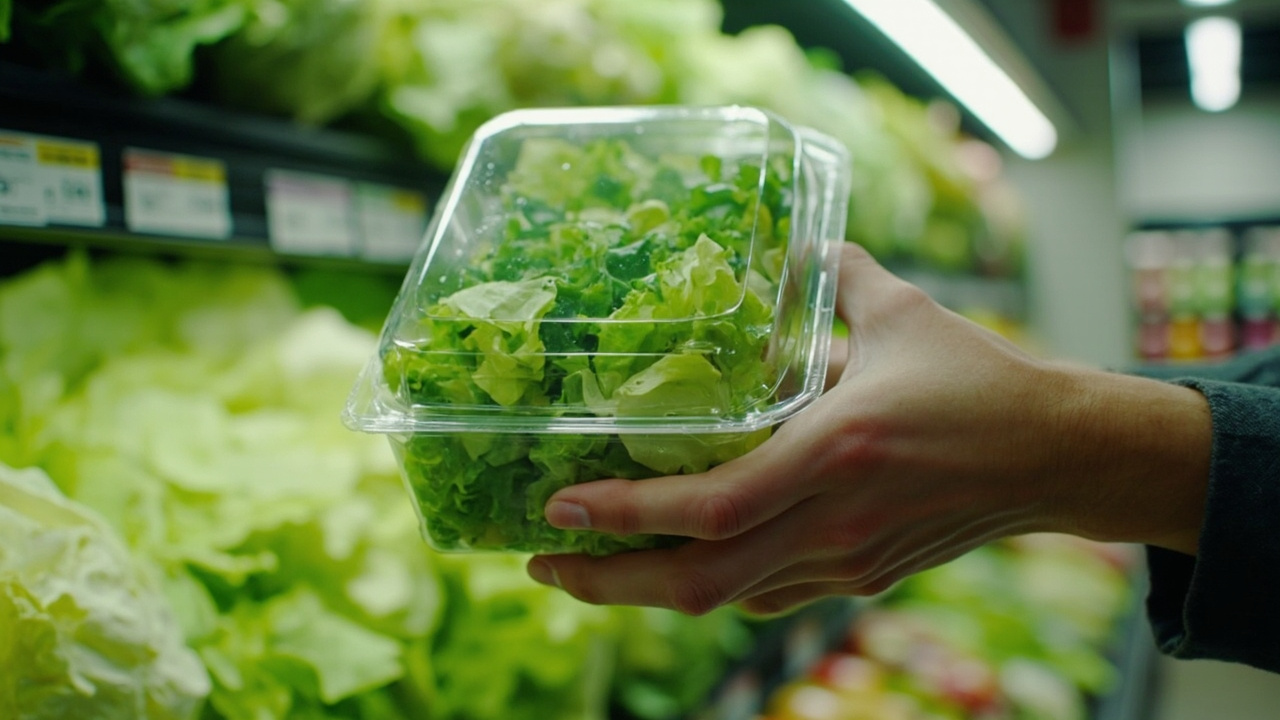
Gallup tied its reading to the largest cyclospora outbreak recorded in the U.S., which it said began in June, sickened more than 12,000 people across 21 states and officially ended Sept. 11. Food Dive reported the outbreak was tied to Taylor Farms iceberg lettuce and cited a Numerator analysis in which 10% of households reduced spending on salads and fresh greens and more than a quarter stopped buying them.
CIDRAP reported the FDA had traced a 38-case E. coli O157:H7 outbreak to ready-to-eat chicken wraps, recalled before the link to illnesses was confirmed, with the FDA, USDA and CDC still examining possible ingredient-level contamination. A six-state Salmonella Bovismorbificans outbreak tied to broccoli sprout seeds prompted Gardeners Basics of Spanish Fork, Utah, to recall one-pound bags of Waltham 29 Broccoli Sprouting Seeds; CIDRAP reported 32 cases, three hospitalizations, no deaths and sales nationwide, including through Amazon and Walmart.
What people did after the warnings
Gallup found 73% of adults had avoided certain brands or types of food in the past year after a government advisory or recall, up from 53% in 2024 and above 62% in 2007 and 60% in 2008. Another 45% had thrown out or returned a product, from 37% in 2024, and 42% had worried that something they ate might have been contaminated, from 26%.
A Change Research survey of 2,023 registered voters, fielded Sept. 15 to 24 with a modeled margin of error of 2.3 points, found 71% had changed shopping or eating habits because of recent food safety concerns and 64% had noticed more recalls than usual. Three-quarters had little or no trust in the FDA's handling of food and medicine safety, with 24% expressing some or a lot; 75% said the same of the EPA.
Gallup reported grocery food confidence down 14 points to 66% among Democrats and down 10 points to 60% among independents, while Republicans rose nine points to 77%. On the federal government, Democrats moved from 74% in 2024 to 48% in 2025 and 30% in 2026; Republicans from 50% to 62% to 70%.
Pesticides, carcinogens and the pull of presence
Asked to rank their top three food safety issues, IFIC respondents named pesticides (48%), carcinogens (46%) and foodborne illness (43%), followed by heavy metals (40%) and food additives and ingredients (37%). Foodborne illness has placed first or tied for first in each of the past three years. Ninety-five percent included at least one ingredient- or chemical-related concern in their top three.
Within that group, 45% said whether an ingredient or chemical is present matters most, compared with 33% who weighed how much is present. The cues people used to judge safety and healthfulness overlapped closely: clear use-by dates (48% for safety, 46% for health), absence of harmful pathogens (35%, 32%), absence of chemical contaminants (31%, 32%) and ingredients they understand and trust (31%, 35%).
A steadier read from the UK regulator
The Food Standards Agency's Consumer Insights Tracker for July to September 2026, published Oct. 29, put trust in the agency at 61% to 63% among adults in England, Wales and Northern Ireland who knew of it, against 60% to 64% the previous quarter. Concern about food poisoning ran 59% in July and 60% in September, above most waves since tracking began in April 2025. In September, food poisoning outbreaks became the most recalled food safety topic at 45%, up from 19% in August, coinciding with a UK Salmonella outbreak.
What brings shoppers back
IFIC's August spotlight survey, fielded Aug. 12 to 17, found 86% aware of the lettuce cyclospora outbreak. Among them, 30% stopped eating all lettuce, 29% avoided iceberg and 22% cut back on produce more broadly. Among lettuce eaters, 76% would feel comfortable if the lettuce were locally grown, 72% if the FDA confirmed affected product had been removed and 71% if it were grown in the U.S.
"Confidence and concern aren't opposites here. They're rising together," IFIC president and CEO Wendy Reinhardt Kapsak said in the release.