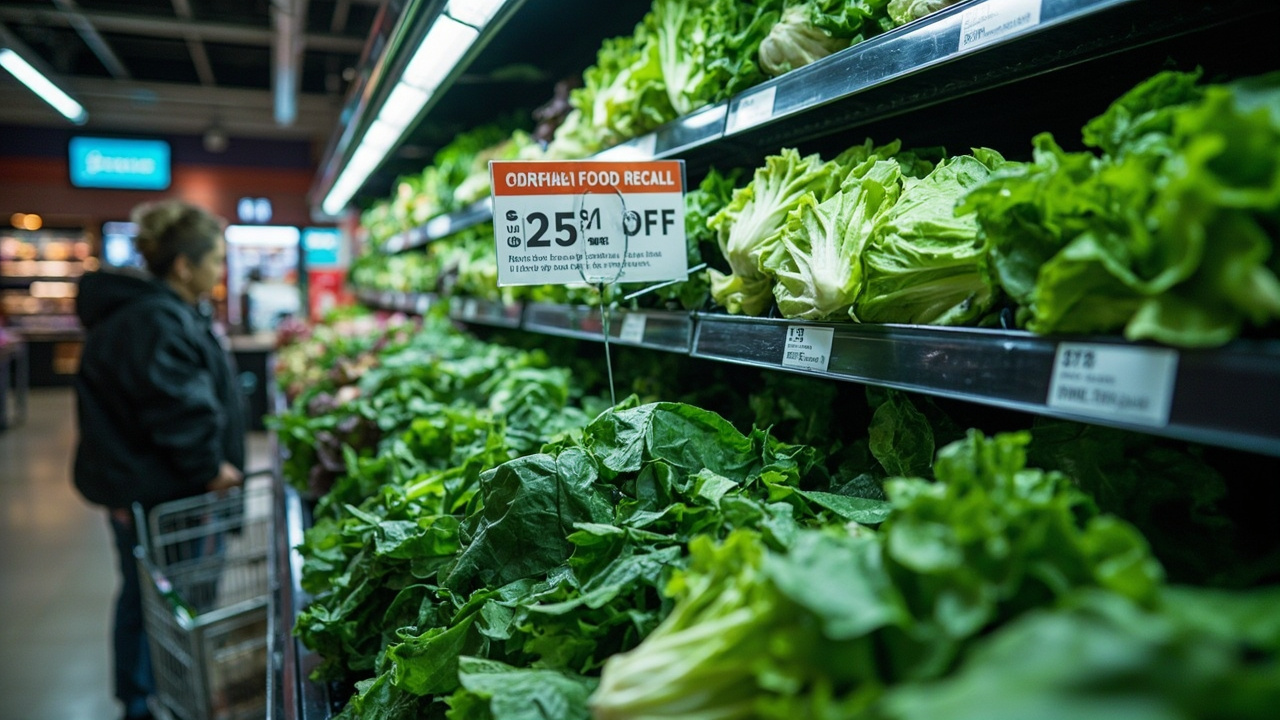
TL;DR: Yes — one recalled brand can temporarily suppress purchases across an entire food category, but shoppers usually substitute nearby foods and return within weeks.
Answer: recalls spill beyond the recalled brand
Food recalls rarely stop at the named product. A September 8, 2025 consumer survey commissioned by GS1 US found that 60% of Americans say they have avoided an entire food category, such as lettuce, following a recall. That headline result is the newest verified signal in a pattern documented across purchase data and outbreak histories: according to the European Review of Agricultural Economics study Balancing health benefits and risks: Consumer responses to seafood recalls, recalls reduced purchases of both recalled and unrecalled brands of the affected species, while according to the USDA Economic Research Service report Consumers’ Response to the 2006 Foodborne Illness Outbreak Linked to Spinach, spinach expenditures fell after federal warnings and shoppers briefly pulled back from leafy greens as a group.
The reassuring second half is that broad avoidance tends to be short and substitution-driven. The seafood analysis found direct effects on recalled brands lasted approximately 4 weeks, while spillover to unrecalled products persisted for only about 1 week, with households increasing purchases of unrecalled species as a substitute. The spinach history showed a similar rebalancing, with the longer-term drop in retail expenditures on fresh spinach products almost matched by gains in expenditures on other leafy greens.
For nutrition, the takeaway is practical: treat a recall as a temporary product-specific alert, keep eating vegetables, protein foods and dairy from unaffected categories, and check lot, brand and origin details before cutting out a whole food group.
How common is category-wide avoidance?
According to the GS1 US Food Safety Recall Survey, concern runs alongside confidence. While 85% of Americans believe food recalls are effective in protecting public health and safety, 93% are concerned about how frequently they occur.
Behavior shifts reported in that survey included:
- 60% say they have avoided an entire food category, such as lettuce, following a recall.
- 59% report hesitancy to purchase the same product or brand again after a food recall.
- 57% admit to discarding recalled food even if their state or region was not impacted.
Generational differences were pronounced. Hesitancy to buy the same product or brand again was reported by 65% of millennials and 64% of Gen Z, compared with 53% of baby boomers. Discarding food even when the respondent’s state or region was not impacted was most common among millennials at 70%.
The survey attributed recalls to a variety of reasons, including contamination with bacteria like salmonella or E. coli, undeclared allergens, the presence of foreign objects or even mislabeling. GS1 US president and CEO Bob Carpenter said improved tracking tools, barcoding standards and traceability requirements are evolving to help identify and remove affected products.
A separate June 18, 2025 poll reported by YouGov found that nearly a fifth, at 18%, of U.S. adults report having purchased a food product that was later recalled in the past six months. Among those affected, fruits or vegetables at 52% and eggs at 48% topped the list of most frequently recalled purchases, followed by meat or poultry at 44% and milk or dairy at 40%. Other items cited included beverages like juice or plant-based milk at 39%, snack foods such as chips or granola bars at 37%, fresh or packaged salads at 32%, and ice cream or frozen yogurt at nearly a third, or 30%.
What shoppers do after a recall
Disposal is the dominant immediate step. In the YouGov results, the most common reaction was discarding the recalled products, reported by 41%. Nearly a third, at 30%, stopped consuming the product altogether, while 26% returned the product to the store. Fewer sought compensation: 23% requested a refund or replacement, and 9% contacted the manufacturer or store. A significant portion, at 18%, reported taking no action at all.
How people learn about recalls shapes how broadly they react. Around two-fifths of affected consumers, at 39%, said they first heard the news through media coverage. Fewer were alerted directly by stores via email or text at 12%, or through personal networks like family and friends at 13%. Government websites like the FDA’s at 6%, brand websites at 6%, and product packaging at 5% played smaller roles in notification.
Trust effects were measurable. Polling data showed food recalls have had a tangible effect on consumer trust, with 31% of those impacted reporting a moderate loss of trust in the brand in the excerpt available from YouGov.
The GS1 US findings point in the same direction on repeat purchase: 59% reported hesitancy to purchase the same product or brand again. For nutrition continuity, that hesitancy matters more when it widens from one label to a whole category, because skipping all lettuce, all seafood or all eggs removes nutrients that an unaffected brand or species could still supply.
Case study: the 2006 spinach E. coli outbreak
The spinach episode remains the clearest U.S. example of a narrow warning producing broad, then re-sorted, consumption changes. According to the USDA Economic Research Service, consumers responded to the Food and Drug Administration’s September 2006 warnings to avoid eating spinach because of possible contamination with E. coli O157:H7.
The sequence was fast and unusually sweeping. On September 14, 2006, FDA announced that consumers should not eat bagged spinach, defined as fresh ready-to-eat spinach that comes into retail stores already in bags. The next day, FDA expanded the warning to include all fresh spinach, both bulk and bagged, with bulk defined as fresh spinach sold in bunches or loose for consumers to bag. Stores and restaurants immediately removed spinach from shelves and menus. Spinach harvesting and marketing ceased, and there was no U.S. fresh spinach on the market for 5 days until FDA announced spinach grown in some areas was safe to consume. The main spinach production area was off the market for an additional 10 days until cleared by FDA.
The human toll counted by ERS was 204 illnesses across 26 states and one Canadian province, including 104 hospitalizations, 31 cases of hemolytic-uremic syndrome and 3 deaths. On September 29, FDA announced that spinach on the shelves is as safe as it was before this event, at a point when the contaminated product was no longer in the marketplace. The agency had identified one brand of bagged spinach as the contaminated product but could not determine exactly how the spinach had become contaminated.
ERS research found that consumers generally responded specifically to FDA’s announcement in the sense that spinach sales plunged without panic about other vegetables, yet the short-term impact was a drop in demand for all leafy greens as consumers briefly substituted other vegetables for leafy greens. Over the longer term, consumers shifted purchases among leafy greens, but total expenditures for leafy greens did not change. While spinach expenditures fell, consumers turned to other leafy greens as substitutes, and the longer-term drop in retail expenditures on fresh spinach products was almost matched by gains in expenditures on other leafy greens.
That pattern matters for healthy eating. The FDA announcement surprised consumers and acted as a market shock that disrupted typical purchase patterns, in ERS terms. Consumers typically substitute one product for another based on relative prices, but they may also substitute based on food-safety characteristics, turning to another leafy greens product they think is safer. Because other bagged leafy greens have similar packaging and brand names and are displayed on the same shelves, ERS noted those attributes could have led some shoppers to initially view similar-looking products as equally risky.
What purchase data show about spillover
A newer purchase-based test comes from seafood. Using weekly NielsenIQ data from 2010 to 2022, Virginia Tech researcher Xi He examined household purchases of recalled brands and spillover to unrecalled brands of the same species and to unrecalled species, as summarized in Balancing health benefits and risks: Consumer responses to seafood recalls.
The study found recalls reduced purchases of both recalled and unrecalled brands of the affected species, demonstrating negative within-species spillover effects. It also found households increased purchases of unrecalled species as a substitute, reflecting positive cross-species spillover effects.
Duration was brief. Direct impacts on recalled brands lasted approximately 4 weeks, while spillover effects on unrecalled products persisted for only about 1 week. In other words, the “don’t eat anything like it” phase faded quickly, and protein rotation resumed.
The result aligns with earlier brand-level work cited in that literature, including the analysis of the Peter Pan peanut butter recall published as The Impact of Food Safety Incidents Across Brands: The Case of the Peter Pan Peanut Butter Recall. The consistent lesson is that collective reputation dips after an incident, then recovers, with unaffected sellers initially caught in the downdraft.
For shoppers balancing benefits and risks, seafood is a sensitive case because federal dietary guidance encourages seafood intake while advisories warn specific groups about mercury in certain species. General consumer-education research on fish has examined how risk and benefit information shifts choices, but the 2010-to-2022 purchase results suggest most recall-driven avoidance is a short substitution, not a lasting exit from the category.
How to respond without losing nutrients
Check scope before you skip. Recalls name a brand, product, size, lot code, date range or growing region. If your bag, carton or can does not match, or your state or region was not impacted, discarding everything in the category removes healthy options without added safety. The GS1 US finding that 57% discard even when their area was not impacted shows how often precaution overshoots the notice.
Swap, don’t stop. When spinach was unavailable, shoppers who moved to other leafy greens kept vegetable spending intact. When a seafood species was recalled, buyers in the NielsenIQ data lifted purchases of unrecalled species. Romaine, leaf lettuce, iceberg, frozen spinach, canned fish, eggs, beans, poultry or dairy can hold the line on fiber, potassium, calcium, vitamin A, vitamin C, iron and omega-3s while one item is sidelined. Choose the substitute that fits your usual meal pattern rather than pausing vegetables or protein altogether.
Use faster alerts and keep records. Because only 12% in the YouGov sample learned about recalls from a store email or text and only 6% from a government website like the FDA’s, signing up for retailer notifications and checking receipts helps narrow the response. Keeping packaging until food is used makes lot checks possible.
Traceability rules aim to shrink the gray area. Regulation taking shape includes FSMA Rule 204, part of the Food Safety Modernization Act signed into law in 2011. The rule adds stricter recordkeeping for foods most often implicated in recalls, such as leafy greens, shell eggs and nut butters among others on the FDA’s Food Traceability List, and requires that full traceability data needed to support a recall be made available to FDA within 24 hours. FDA recently proposed to extend the implementation deadline until July 20, 2028. GS1 US said it is helping industry apply standards to enhance supply chain visibility and enable rapid identification of affected products, with guidance including the FSMA Rule 204 Implementation Guideline.
The bottom line echoes the research title posed a decade ago in Food Policy by Whitney O. Peake, Joshua D. Detre and Clinton C. Carlson: One bad apple spoils the bunch? An exploration of broad consumption changes in response to food recalls. The evidence says yes, briefly — then shoppers sort safe from suspect and fill the plate again.