TL;DR: Health and Human Services Secretary Robert F. Kennedy Jr. told produce leaders on June 9 that all government-funded food programs will align with the new federal dietary guidelines within six months.
WASHINGTON, DC — Federal food assistance, school meals, military dining, veterans facilities and prison food service are slated for a coordinated nutrition reset, with Health and Human Services Secretary Robert F. Kennedy Jr. saying public money should reinforce the current federal advice to eat real food.
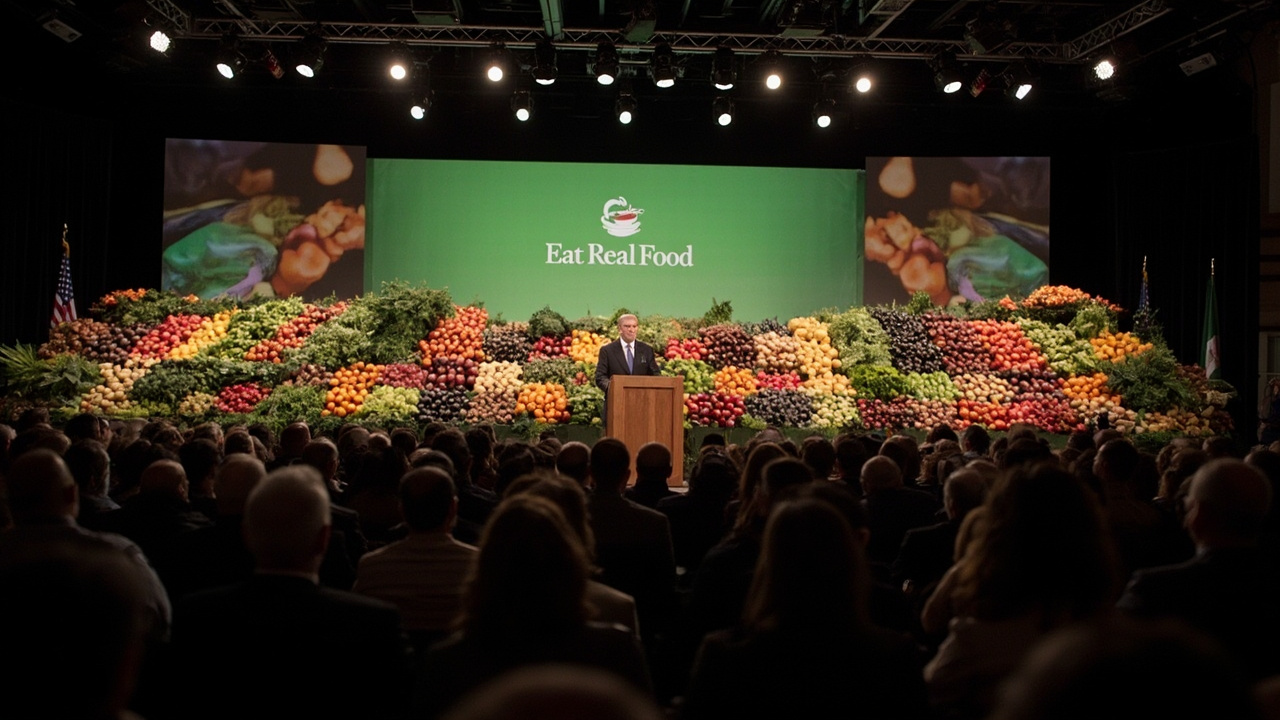
Speaking to attendees of the International Fresh Produce Association's Washington Conference on June 9, Kennedy said every program supported with federal food dollars would be brought into line with the guidelines issued earlier this year, according to Blue Book. He framed the timetable as the next six months and linked it to rising purchases of minimally processed items, including fruits and vegetables.
The pledge covers a vast share of federal nutrition spending. Programs named across conference coverage included the Supplemental Nutrition Assistance Program, the Special Supplemental Nutrition Program for Women, Infants and Children, school lunch programs, Indian Health Services, Head Start, hospitals, military installations, Department of Veterans Affairs facilities and federal prisons, according to Blue Book and reporting by Agri-Pulse Communications in “Kennedy: Defining ultra-processed foods is first step toward reshaping Americans' diets.” Kennedy did not present a detailed implementation mechanism during the appearance, according to Blue Book, but said state-level limits on SNAP purchases of candy and soda had already reduced buying of those products.
International Fresh Produce Association CEO Cathy Burns, who appeared with Kennedy, said the industry hopes shoppers who reduce soda and confectionery purchases will instead spend in the fresh produce department, according to Blue Book.
What “alignment” would cover
Kennedy described alignment as using federal purchasing power to bring more whole and minimally processed foods — especially fruits and vegetables — into institutional and benefit programs while moving away from highly processed products, according to Agri-Pulse Communications.
The scope discussed on stage was broad. The Packer, in “RFK Jr. Details Radical Cultural Shift Coming for U.S. Food Policy,” reported that Kennedy listed SNAP, WIC, school lunches, Indian Health Services and Head Start, plus food programs for the military, veterans and federal prisons, as areas where funding would be required to reflect the new guidance over the coming six months.
HHS senior adviser Calley Means, also speaking at the event, described a longer procurement shift extending over a decade, saying tens of billions of dollars in government buying could move from ultra-processed items toward fresh foods, fruits and vegetables, according to Agri-Pulse Communications. Means also pointed to actions by the Trump administration and almost 30 governors to remove soda and candy as SNAP options and described parallel efforts affecting school feeding, hospitals, military sites and prisons.
Agriculture Secretary Brooke Rollins echoed the nutrition-reset theme in remarks to the same conference on June 10, saying USDA was working to align its programs with the dietary-guidance priorities, according to Agri-Pulse Communications in “Rollins touts deregulation, nutrition reset and ag labor reforms to produce sector.” Rollins pointed specifically to changes in SNAP retailer stocking requirements intended to ensure stores accepting benefits carry a wider range of staple foods, including more fresh produce, dairy and protein.
From a long rulebook to “eat real food”
Kennedy contrasted the current guidance with the document he said he inherited, describing a 453-page food-pyramid guidelines package as incomprehensible and unlikely to be read, according to The Packer. He said officials instead produced a document of fewer than 10 pages developed over 11 months by about a dozen nutrition specialists from leading universities and supported with peer-reviewed research and government databases.
According to Blue Book, Kennedy said the earlier, much longer version was incomprehensible and had been shaped by processed-food interests, while the replacement can be summarized as “eat real food,” with fruits and vegetables in a prominent position. In the January rollout of the guidelines by HHS and USDA, Kennedy said: “American households must prioritize whole, nutrient-dense foods—protein, dairy, vegetables, fruits, healthy fats, and whole grains—and dramatically reduce highly processed foods.”
The Packer reported that the revised approach places fruits and vegetables with proteins and grains at the top of the visual guidance, replacing an approach Kennedy criticized for placing products such as fruit-flavored cereal near the top of the pyramid. Burns introduced Kennedy as someone who had placed nutrition and health at the center of the policy discussion, according to The Packer.
Kennedy tied the guidance to chronic-disease trends. He said the United States carries the highest chronic-disease burden of any country, that the food supply contains 10,000 ingredients compared with 400 in Europe, and that 38% of American teenagers are now diabetic or prediabetic in a way he connected directly to food, according to The Packer. He recalled that when his uncle was president, a typical pediatrician might complete a 40- or 50-year career without seeing a case of type 2 diabetes in childhood. He predicted that the Make America Healthy Again strategy and a turn toward whole foods would substantially reduce obesity, diabetes and heart disease, adding, “I think we’ll see this in the next three years,” according to Blue Book.
Ultra-processed food definition comes first
A federal definition of ultra-processed food is the near-term regulatory priority, Kennedy said, because agencies cannot effectively regulate a category that lacks a legal meaning, according to Agri-Pulse Communications.
Kennedy said the definition is under review at the Office of Management and Budget, with the goal of publishing a final version in the next couple of months, according to Agri-Pulse Communications. He had earlier told the Joe Rogan Experience podcast in February that a definition could appear as soon as April. Claudine Kavanaugh, director of FDA’s Office of Nutrition and Food Labeling, told conference participants on June 9 that stakeholders would have an opportunity to comment on the federal definition.
Industry positions on that definition differ. IFPA, which submitted comments to HHS and USDA last October, asked that raw fruits, vegetables and tree nuts be explicitly excluded and that the agencies account for convenience and perishability, according to Agri-Pulse Communications. The association argued that value-added produce such as bagged lettuce, baby carrots and sliced apples should not count as processed merely because of minimal handling that can support consumption. By contrast, the Consumer Brands Association said the phrase “ultra-processed food” was unsuitable for legal definition because it does not distinguish by nutrient content, lacks a scientific basis for isolating particular ingredients or processing steps, and would create significant unintended consequences.
Beyond the definition, Kennedy described a planned mandatory front-of-package labeling system using red, yellow or green signals for overall food quality, according to Agri-Pulse Communications and The Packer. He said the aim was to simplify shopping for people who do not want to read an entire ingredient panel. “Fruits and vegetables will be green,” he said, according to Blue Book, drawing applause reported by Agri-Pulse Communications when he said produce would receive a green light.
SNAP spending patterns under scrutiny
SNAP beverage and candy purchases featured prominently in the discussion. Kennedy said about 10% of SNAP dollars had gone to sugar-sweetened beverages and about 8% to candies, adding, “That is now changed,” according to The Packer. According to Blue Book, he credited state restrictions on candy and soda purchases with lowering those purchases, without detailing a federal enforcement plan for the broader realignment.
The produce sector’s question, posed by Burns, was how to encourage shoppers toward fruits and vegetables rather than merely restricting soda, candy and other items, according to The Packer. Kennedy answered by returning to ultra-processed foods, which he has repeatedly criticized in stark terms, and to the coming definition and labeling work.
Means framed procurement as only one part of the behavioral challenge, saying the shift also requires nutrition education and preparation that consumers enjoy. “We’re working with chefs, celebrity chefs, and top people who are going to make that food delicious,” he said, according to Agri-Pulse Communications.
Medical training, hospital food and personal data
Kennedy also outlined changes in medical education and health technology. He said most medical-school graduates receive about two hours of nutrition instruction, while more than 70 medical schools have now agreed to require 40 hours or the equivalent, according to Blue Book. The Packer reported a related formulation: 80% of newly graduated doctors say they received only two hours of nutrition training, while several schools have committed to 40 hours.
In addition, eight major medical examination and accreditation boards have agreed to revise licensing examinations so that 15% of questions focus strictly on nutrition, a change intended to ensure students treat the coursework seriously, according to The Packer. Kennedy said many chronic diseases can be reversed through dietary change, according to Blue Book, and The Packer reported his related point that type 2 diabetes and various chronic conditions can improve substantially or reverse through diet alone.
Kennedy also said HHS has sought better hospital food and closer cooperation with clinicians on nutrition instruction, according to Blue Book and The Packer. On technology, he described partnerships with more than 600 technology companies to help Americans download health data to phones and use shopping applications to receive individualized grocery advice, according to Agri-Pulse Communications. He said a shopper would eventually be able to point a phone at a package and receive guidance on whether to buy it personally. “You’ll be able to shine your cell phone onto the label, and it will tell you whether you personally should purchase that product,” he said.
When Burns asked how the Make America Healthy Again effort should judge success, Kennedy pointed to produce sales and eating patterns. “I’d like to see people who are selling fruits and vegetables have much more of the market share,” he said, citing higher fresh-produce consumption as evidence that Americans are moving away from ultra-processed products, according to Agri-Pulse Communications. Means described the objective as a 10-year progression from a different policy framework centered on food toward reversal of chronic-disease trends.
Kennedy also emphasized his working relationship with Agriculture Secretary Brooke Rollins, saying their partnership began when both were confirmed at the start of the Trump administration in early 2025 and that HHS and USDA have remained aligned on Make America Healthy Again goals, according to Blue Book. The Packer described that collaboration as a 16-month partnership dating to the week of their confirmations and centered in part on rewriting the food pyramid. Rollins, for her part, called the new guidelines the most significant reset of federal nutrition policy in American history, according to Agri-Pulse Communications.
Sources referenced
- HHS Secretary: All government food programs to align with dietary guidelines - Blue Book (https://www.bluebookservices.com/hhs-secretary-all-government-food-programs-to-align-with-dietary-guidelines/)
- Kennedy: Defining ultra-processed foods is first step toward reshaping Americans' diets | Agri-Pulse Communications, Inc. (https://www.agri-pulse.com/articles/24812-kennedy-defining-ultra-processed-foods-is-first-step-toward-reshaping-americans-diets)