TL;DR
Federal and state nutrition regulations enacted or proposed in 2024–2025 — including the FDA's finalized front-of-pack labeling framework, California's pioneering food additive bans, and the 2025–2030 Dietary Guidelines process — are forcing food manufacturers to reformulate products, rewrite labels, and lobby aggressively against stricter disclosure rules, with direct consequences for what ends up on American dinner tables.
The Policy Moment: Why 2025 Is a Turning Point for Nutrition Regulation
The United States has not seen this density of nutrition-related rulemaking since the Nutrition Labeling and Education Act of 1990 mandated the Nutrition Facts panel. In the span of roughly eighteen months, regulators have moved on multiple simultaneous fronts:
- FDA finalized its "Healthy" nutrient content claim rule in December 2024, updating a definition that had been frozen since 1994.
- California's AB 418, signed into law in October 2023 by Governor Gavin Newsom, bans brominated vegetable oil, potassium bromate, propylparaben, and red dye No. 3 from food sold in the state — effective January 1, 2027.
- The Dietary Guidelines Advisory Committee (DGAC) began its 2025–2030 cycle in late 2023, with final guidelines expected by the end of 2025, and early deliberations already signaling possible new warnings around ultra-processed foods (UPFs).
- A bipartisan Senate bill, the Food Labeling Modernization Act of 2023, would require front-of-pack (FOP) nutrition labels nationally if passed — a measure the food industry has fought with tens of millions in lobbying dollars.
Each of these actions ripples through the food supply chain, affecting formulation decisions worth billions of dollars.
FDA's Overhaul of the "Healthy" Definition
On December 27, 2024, the U.S. Food and Drug Administration published its final rule redefining which foods may carry the voluntary "healthy" nutrient content claim. The new definition aligns with the 2020–2025 Dietary Guidelines for Americans, replacing a 1994 standard that famously disqualified avocados and salmon — foods rich in beneficial fats — while allowing some high-sugar breakfast cereals to carry the claim.
Under the updated rule, a food must contain a meaningful amount from at least one of the food groups or subgroups recommended by the Dietary Guidelines (fruits, vegetables, grains, dairy, protein foods) and must stay within specified limits for saturated fat, sodium, and added sugars. The FDA estimates the rule will affect roughly 5,000 products currently marketed with health-related language.
Food manufacturers have until February 25, 2028 to comply, but many large companies — including General Mills, Kellogg's (now Kellanova), and Nestlé — have already announced reformulation timelines to protect high-value "healthy" brand positioning. According to the FDA's official announcement (FDA.gov), the agency received more than 1,000 public comments during the rulemaking process, with consumer advocacy groups largely supportive and the Grocery Manufacturers Association pushing for a longer compliance window.
California Leads on Additives: The "Skittles Ban" and Beyond
California's AB 418, often called the "Skittles ban" in headlines (though red dye No. 3 appears in far more products than that one candy), is the most aggressive state-level food additive regulation in U.S. history. The law does not ban the sale of products containing these substances outright — it bans manufacturing or selling any food product containing the listed additives within California starting January 1, 2027.
The four targeted additives are:
- Brominated vegetable oil (BVO) — already voluntarily removed by PepsiCo from Gatorade in 2013, but still present in some regional sodas; FDA proposed revoking its authorization in November 2023.
- Potassium bromate — a flour treatment agent banned in the EU, Canada, and China but still used by some U.S. bakers.
- Propylparaben — a preservative with documented endocrine-disrupting properties in animal studies.
- Red dye No. 3 (erythrosine) — linked to thyroid cancer in male rats in 1990s studies; FDA banned it from cosmetics in 1990 but inexplicably left it in food.
In January 2025, the FDA finally revoked authorization for red dye No. 3 in food and ingested drugs, giving manufacturers until January 15, 2027 (ingested drugs) and January 15, 2028 (food) to reformulate. As reported by The Washington Post (washingtonpost.com), the FDA's action came after decades of petitions from the Center for Science in the Public Interest (CSPI), which first formally requested the ban in 1983.
The California law has already produced a measurable industry response: Mars, Inc. announced in early 2024 that it would remove red dye No. 3 from all U.S. products by the end of 2024, ahead of any legal deadline, citing reputational risk in the state's $1.4 trillion consumer economy.
Front-of-Pack Labeling: The Biggest Battle Ahead
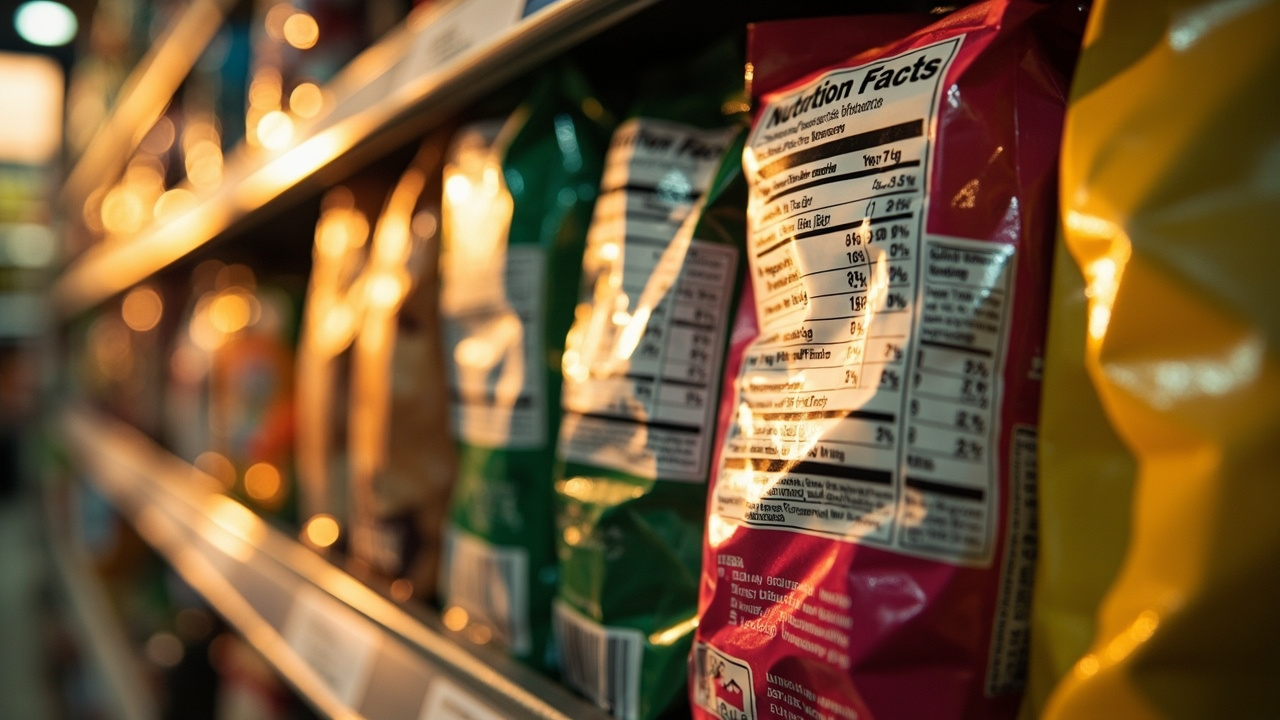
The most consequential unresolved regulatory fight in U.S. nutrition policy is over front-of-pack (FOP) labeling — a system that would place simple, standardized nutrition information on the front of food packages rather than requiring consumers to flip the box and parse the Nutrition Facts panel.
The FDA published a proposed rule for FOP labeling in January 2023, describing a "Nutrition Info" box format displaying calories, saturated fat, sodium, and total sugars with "low," "medium," or "high" designators. The agency has not yet finalized the rule as of mid-2025, partly due to intense industry opposition and partly due to the change in administration in January 2025.
The evidence base for FOP labels is robust. A 2023 meta-analysis published in PLOS Medicine found that warning labels (the most restrictive FOP format, used in Chile, Mexico, and Canada) significantly reduced consumer selection of less-healthy products — by 19% on average across 11 randomized controlled trials. Chile, which implemented mandatory black octagonal warning labels in 2016, saw a 24% reduction in purchases of beverages exceeding sugar thresholds within three years, according to research published in The Lancet.
Food industry groups — led by the Consumer Brands Association and the National Confectioners Association — have spent more than $40 million lobbying against mandatory warning-style FOP labels since 2019, according to federal lobbying disclosure records compiled by OpenSecrets. Their preferred alternative is the voluntary "Facts Up Front" icon system, which displays calories and selected nutrients without any "high" designator.
Public health advocates argue that voluntary systems consistently fail. The American Heart Association, in a June 2024 policy statement, called on Congress to pass the Food Labeling Modernization Act and on FDA to finalize a mandatory FOP rule with evaluative — not merely descriptive — symbols.
The 2025–2030 Dietary Guidelines: Ultra-Processed Foods Under the Microscope
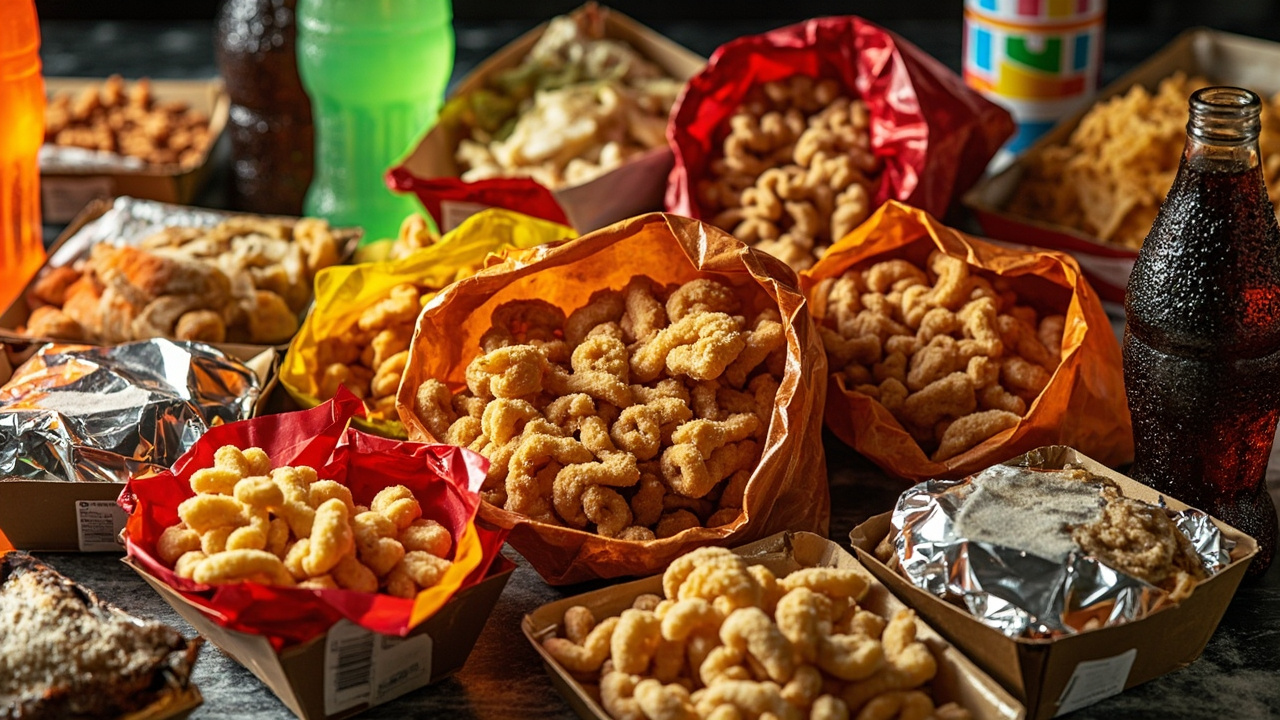
Every five years, the USDA and HHS jointly publish the Dietary Guidelines for Americans, which shape everything from school lunch menus to hospital food service to WIC benefit packages. The 2025–2030 iteration is the first to formally task its advisory committee with reviewing evidence on ultra-processed foods (UPFs) as a dietary category — not just their nutrient components.
The DGAC published its scientific report in December 2024, recommending that Americans limit consumption of ultra-processed foods. If the final government guidelines (expected late 2025) retain this language, it would represent the first time the U.S. dietary guidelines explicitly address food processing level rather than just nutrients — a major conceptual shift that would affect federal nutrition programs serving more than 100 million Americans.
The NOVA classification system, developed by Brazilian epidemiologist Carlos Monteiro, categorizes foods by degree of industrial processing. Approximately 58% of calories in the average American adult diet come from UPFs, according to a landmark 2016 study in the BMJ Open by Euridice Martínez Steele and colleagues — a figure that has not meaningfully declined in subsequent surveys.
What This Means for Consumers Right Now
Three concrete actions follow directly from the current regulatory environment:
1. Check ingredient lists for red dye No. 3 (FD&C Red No. 3). Manufacturers have until 2027–2028 to remove it, meaning products on shelves today may still contain it. Look for it in maraschino cherries, some fruit cocktails, canned strawberries, and certain candies.
2. Understand that "healthy" labels are changing. A product carrying the "healthy" claim today may not qualify under the new FDA definition effective 2028. Conversely, foods like salmon jerky and avocado-based snacks may soon be eligible to use the term for the first time.
3. Track your state's regulatory calendar. California's additive bans take effect January 1, 2027. Several other states — including New York, Illinois, and Washington — have introduced copycat legislation. National reformulation often follows state mandates because manufacturers prefer a single U.S. recipe.
The Bottom Line
Nutrition policy in 2025 is moving faster than at any time since the 1990 nutrition labeling revolution. The FDA's redefinition of "healthy," California's additive bans, the imminent FDA red dye No. 3 phase-out, and the Dietary Guidelines' first-ever focus on ultra-processed foods are converging to reshape the food supply. Whether federal FOP labeling ultimately passes will determine how much of this change reaches consumers visibly, at the point of purchase, where decisions are actually made.