Losing Family Recipes Is a Public Health Problem
TL;DR: The disappearance of traditional family recipes is not merely a cultural loss — it is a documented nutritional crisis that raises chronic disease risk and frays the community bonds that protect mental and physical health.
When Nigerian cultural commentator Denike Olori posted in mid-2024 that "your in-laws don't have to love you," the observation sparked a broader conversation about eroding social contracts — including the family kitchen. That flash of social-media candor encapsulates a measurable trend: as households eat separately, eat out more, and stop transmitting recipes across generations, they are also abandoning one of the most potent tools for lifelong healthy living.
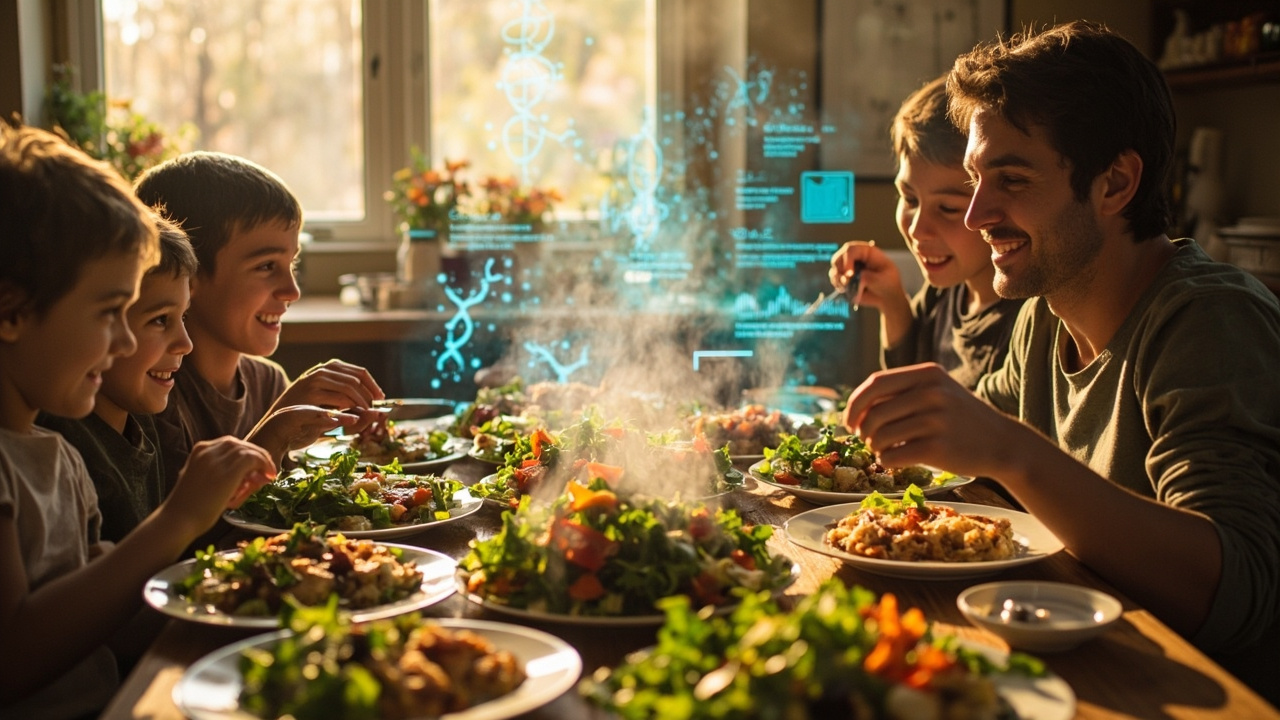
The evidence is concrete. According to Johns Hopkins Medicine, families that eat together regularly are significantly more likely to consume fruits, vegetables, and whole grains, and significantly less likely to develop obesity or type 2 diabetes. Their review of shared-meal research found that children in households with frequent family dinners had up to a 24 percent lower risk of overweight compared with children in households that rarely shared meals (Healthy Meals Together with Family, Johns Hopkins Medicine). That is not a rounding error; it is a clinically meaningful difference driven in large part by what gets cooked — and by whom.
What a Family Recipe Actually Delivers Nutritionally
Traditional family recipes are not just nostalgia encoded in flour and spice. They are calorie-controlled, portion-practiced, and often seasonally grounded in ways that ultra-processed convenience foods are not.
A 2023 pilot study published in Frontiers in Nutrition examined a culturally tailored cookbook intervention among hypertensive Filipino-Americans. Participants who cooked from adapted heritage recipes — dishes that preserved traditional flavor profiles while reducing sodium and saturated fat — showed meaningful reductions in blood pressure and reported stronger dietary adherence than those given generic nutrition guidelines alone (Culturally-tailored cookbook for promoting positive dietary change among hypertensive Filipino Americans, Frontiers in Nutrition, 2023). The key finding: cultural relevance increases compliance. People eat better when the food feels like home.
This dynamic applies across ethnic and geographic contexts. Heritage diets — Mediterranean, West African, South Asian, Indigenous American — share structural similarities: high vegetable and legume content, minimal refined sugar, fermented or slow-cooked preparations that preserve micronutrients. When those diets are displaced by fast-food homogenization, the nutrient profiles collapse.
The Social Meal as Health Infrastructure
Family meals function as more than a delivery mechanism for calories. They are a form of health infrastructure.
A large study published in BMC Public Health tracked shared meal practices across diverse households and found that families who ate together at least four times per week reported better intra-family communication, higher emotional wellbeing scores in children aged 6–17, and lower rates of depression in caregivers (BMC Public Health, 2022). The authors concluded that the mealtime ritual itself — the predictability, the conversation, the shared effort of cooking — produced protective effects independent of the specific foods consumed.
In other words, the recipe is the vehicle; the table is the destination.
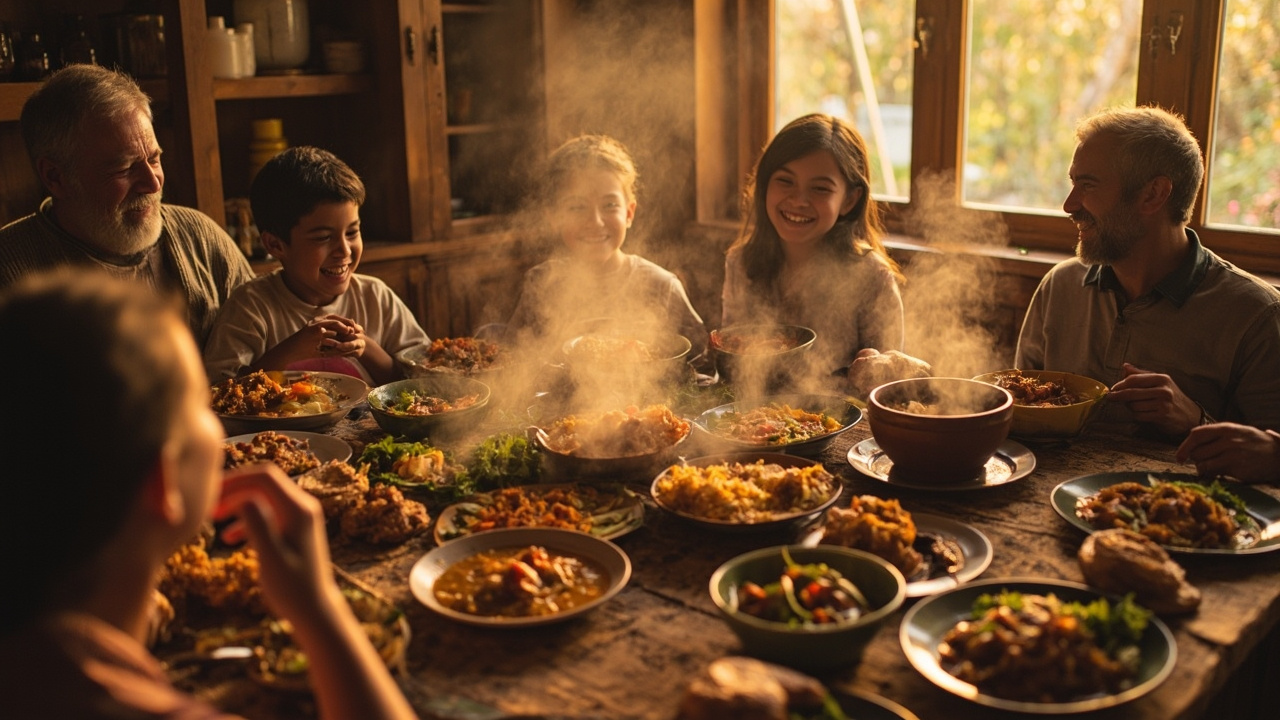
This research mirrors what nutritional anthropologists have documented for decades: food preparation is one of the primary ways that values, identity, and community norms are transmitted between generations. When that transmission breaks down — when grandmothers stop teaching grandchildren, when in-laws share neither kitchen nor culture — something measurable is lost.
The Globalization Trap: How Convenience Costs Health
The rapid globalization of food supply chains has produced a paradox. Access to calories has never been greater; access to nutritious, culturally grounded food has narrowed considerably for many communities.
Nutrition researchers writing in Nutrition Research Reviews documented this dynamic in a 2022 narrative review examining how urban populations shifting away from heritage diets toward commercially processed foods experienced sharp rises in nutrition-related non-communicable diseases — type 2 diabetes, hypertension, obesity — within a single generation. The researchers specifically cited the loss of intergenerational recipe transmission as a structural driver of that transition (From tradition to transition: heritage diets and NCDs, Nutrition Research Reviews, Cambridge University Press).
The same pattern appears in high-income countries. Many adults under 40 report not knowing how to prepare even a single dish their grandparents cooked regularly — a generational gap with direct dietary consequences. When family recipes disappear, the default meal increasingly becomes something designed by a food-science laboratory to maximize palatability and shelf life, not nutritional density.
What the Research Says About Reversing the Trend
The good news: the trend is reversible, and community-level interventions have already demonstrated measurable results.
In June 2021, NPR profiled a series of community cooking initiatives in which families were guided to cook traditional heritage recipes together, with facilitators helping to make light nutritional adaptations — swapping in olive oil for lard, reducing added salt, increasing vegetable portions — without altering the dish's cultural identity. Participants reported not only improved dietary habits but stronger family relationships and a greater sense of cultural belonging (3 ways to honor and pass on traditions through food, NPR, June 2, 2021).
Technology is playing a growing role. Apps such as Paprika, Yummly, and community-driven platforms like Kitchen Stories allow families to digitize, annotate, and share recipes across generations and geography. These tools matter most when paired with intentional family practice — a weekly cooking session, a video call with a grandparent, a family cookbook project that becomes a physical artifact.
Practical Steps to Preserve Your Family's Culinary Heritage
1. Document Before You Lose the Source
Schedule a cooking session with the oldest cook in your family. Record video, write down quantities, and note the sensory cues — "cook until it smells nutty" — that recipes rely on but rarely articulate. This is urgent: once that knowledge holder is gone, the recipe is often gone with them.
2. Adapt, Don't Abandon
Use the framework demonstrated in the Frontiers in Nutrition study: keep the flavor profile, reduce sodium and saturated fat incrementally. A 25 percent sodium reduction is rarely detectable but meaningful over a lifetime of eating. Swap refined grains for whole grains gradually so that texture and taste remain familiar.
3. Make the Table Non-Negotiable
The BMC Public Health research identifies four shared meals per week as the threshold where health benefits become statistically measurable. Start there. Even one additional shared meal per week over current habits is a documented improvement.
4. Connect Cooking to Nutrition Education
Children who cook with caregivers consume more vegetables and are more adventurous eaters, as noted by Johns Hopkins Medicine. Involve children early — even young children can wash vegetables, measure ingredients, and stir. The skill-building compounds over years.
5. Join or Create a Community Cooking Circle
The NPR-profiled initiatives show that peer accountability accelerates both skill-building and dietary change. Local churches, community centers, and cultural organizations are natural hosts for heritage cooking groups. The social reinforcement of cooking together mirrors the same community bonds that family meals historically provided.
The Hidden Cost of Fractured In-Law Relationships
Denike Olori's viral provocation — that in-laws don't have to love you — points to a genuine cultural negotiation happening in modern families worldwide. But there is a nutrition-specific cost worth naming directly: in many cultures, the mother-in-law or extended family elder is the primary conduit through which heritage recipes move from one generation to the next.
When those relationships are contractual rather than warm, when distance (geographic or emotional) separates nuclear families from their extended kin, the recipe transfer simply does not happen. The young couple cooks from a meal-kit app rather than from memory or a handwritten card. The children grow up with no reference point for what "home" tastes like from a nutritional standpoint.
This is not an argument for enduring toxic family dynamics. It is an argument for recognizing what is at stake — nutritionally, culturally, and communally — when the bonds that once organized cooking and eating erode without replacement.
The Bottom Line
The science is unambiguous: families that cook and eat together eat better, live longer, and report higher emotional wellbeing. The recipes themselves carry cultural intelligence about nutrition that has been refined across generations. Research from Nutrition Research Reviews, Frontiers in Nutrition, BMC Public Health, and Johns Hopkins Medicine all converge on the same conclusion — shared cooking and eating are among the most cost-effective public health interventions available, requiring no prescription, no clinic visit, and no new technology.
Losing family recipes is not inevitable. But reversing the trend requires treating family cooking as the public health priority that the evidence says it is.
Every recipe passed down is a small act of preventive medicine.