TL;DR: U.S. food recalls in Q1 2026 affected far more product with fewer events, as USDA volume hit 37.1 million pounds — the third-highest in more than two decades.
U.S. food recall activity took on a bigger footprint in the first quarter of 2026, with USDA-regulated products reaching the third-highest recall volume in more than two decades and FDA-regulated food recalls affecting nearly twice as many units as the previous quarter, according to new data from Sedgwick reported by Quality Assurance & Food Safety.
The report, published May 18, 2026, describes a quarter in which FDA food recall events declined and USDA recalls remained limited in number, while several large-scale incidents involving foreign materials and undeclared allergens drove sharp increases in the amount of product affected.
Sedgwick's latest U.S. Product Safety and Recall Index report frames food within a broader product-safety pattern, as described in a Sedgwick press release dated May 14, 2026.
How large was the Q1 surge across all industries?
Total volume of defective products recalled across five U.S. industries increased 27% quarter-over-quarter, rising to 492 million units in Q1 2026, according to Sedgwick.
In contrast, the number of recall events declined 10.5%, from 877 in Q4 2025 to 785 in Q1 2026.
Sedgwick stated that those data indicate that while fewer recalls were announced overall, the scale and impact of individual events continued to intensify.
Sedgwick's quarterly Product Safety and Recall Index report provides analysis covering the automotive, consumer products, food and drink, pharmaceutical, and medical device industries.
The latest edition examines recall data from January through March and offers an early look at April developments shaping the product safety landscape.
Among the cross-industry findings, the consumer products sector was the only industry to record an increase in recall events, rising 14.5% to 142.
The sector also experienced a 347% increase in recalled units quarter-over-quarter.
Several industries recorded significant numbers of units recalled in Q1, including the pharmaceutical sector, which set a 12-year high in recall volume with 218.8 million units impacted.
The automotive industry reported its highest quarterly unit total since Q1 2024 with 12.2 million vehicles recalled.
In the food sector, recalls regulated by the U.S. Department of Agriculture accounted for 37.1 million pounds of product, which Sedgwick identified as the third-highest total in more than two decades.
Sedgwick said U.S. product recall activity remained elevated in the first quarter of 2026 as companies faced mounting regulatory pressure and continued disruption across global supply chains.
The company publishes its Product Safety and Recall Index report every quarter and describes it as the only report that aggregates and tracks recall data across multiple government agencies and industries to help stakeholders respond to the regulatory environment, product recalls, and other in-market challenges.
What drove USDA-regulated food recalls?
Bacterial contamination, no inspection and foreign materials contributed to USDA recalls, according to the report summarized by Quality Assurance & Food Safety.
Foreign materials was the leading cause of USDA food recalls, accounting for 37 million pounds in Q1.
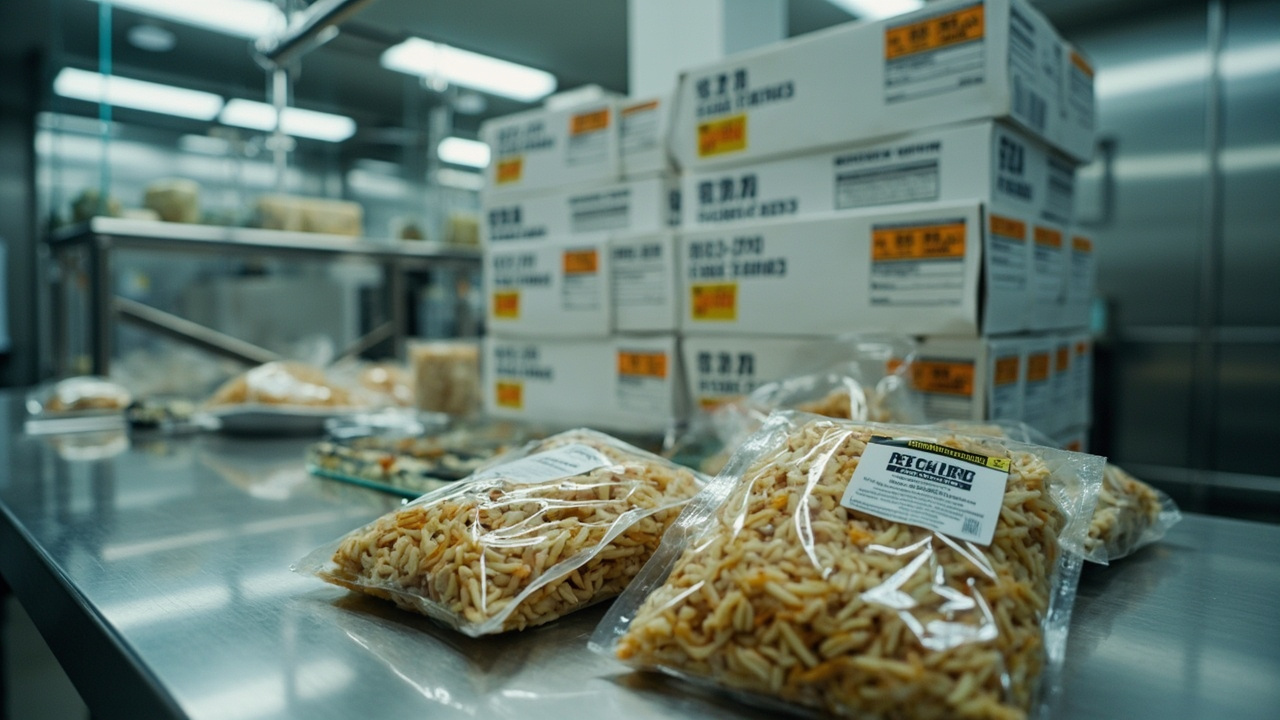
That total was largely due to a single recall of 36.99 million pounds of chicken fried rice products contaminated with glass.
No inspection was second by volume with 59,779 pounds.
Bacterial contamination was third, impacting 36,632 pounds, down from 94,440 pounds in the previous quarter.
Poultry and pork each had two recalls in Q1.
Poultry recalls accounted for 37 million pounds of recalled product, while pork recalls accounted for 55,777 pounds.
Beef and fish were linked to one recall each: 22,912 pounds for beef and 13,464 pounds for fish.
The concentration of USDA volume in very few actions illustrates the quarter's central pattern: limited event counts paired with very large pound totals tied to individual contamination episodes.
Why did FDA events fall while units nearly doubled?
The number of FDA food recalls fell 10.3% in Q1 2026 compared to Q4 2025, decreasing to 140 events.
However, the Q4 figure was the highest quarterly total in the past eight years, Sedgwick reported.
The number of units impacted grew 99.5% from 28.76 million last quarter to 57.40 million this quarter.
Seven recalls affected more than 1 million units.
Sedgwick reports FDA recall impact in units rather than pounds, a measure that can include individual products or packaged items.
That measurement distinction matters for nutrition and consumer-health readers comparing USDA pounds with FDA units, because the two agencies' totals track different product universes and different quantity definitions.
Which hazards dominated FDA food recalls?
In Q1 2026, undeclared allergens were the leading cause of FDA food recalls, with 57 events, up from 49 last quarter.
The most common allergens cited were milk, which was linked to 17 recalls, and soy, which was tied to 14 events.
Four recalls involved gluten.
Foreign materials were the second most common cause of FDA food recalls, accounting for 24 events.
Bacterial contamination ranked third with 22 recalls.
By volume, foreign materials impacted 26.43 million units of FDA-regulated food, the most of any hazard in Q1.
This included a recall of prepared food containing glass that affected 19.07 million units.
Undeclared allergens were second by volume with 19.26 million units recalled, including a single recall of 18.61 million units for undeclared colors.
Bacterial contamination was third and impacted 10.41 million units.
The pairing of event leadership and volume leadership differed by hazard: allergens produced the most separate FDA actions, while foreign materials produced the largest affected quantity.
Which food categories were most affected?
By category, prepared foods led by both recalls and volume in Q1 2026.
There were 41 recalls that impacted 44.98 million units, including two large recalls for foreign materials.
Supplements were second for both events and units.
There were 9.34 million units recalled across 17 events in the supplements category.
That supplement total included 5.44 million sea moss gel superfood supplements that contained Clostridium botulinum.
Baked goods had the third-highest number of events with 15.
They also had the third-most units impacted at 1.19 million.
Together, prepared foods, supplements and baked goods defined the bulk of FDA event counts and affected units during the quarter, with prepared foods alone representing a large share of both measures.
What regulatory shifts accompanied the recalls?
In addition to recall data and analysis, Sedgwick's Q1 Product Safety and Recall Index report provides insights into regulatory developments that the company said will continue to impact product safety throughout 2026.
Both the USDA and Federal Trade Commission tightened enforcement around country-of-origin claims for U.S. made products.
The FTC is also carefully monitoring auto dealerships to ensure transparency in advertised prices and prevent hidden fees for consumers.
Meanwhile, the Food and Drug Administration amended inspection procedures for medical devices and pharmaceutical products.
Companies across all industries should be prepared for more regulatory changes in the coming months, according to Sedgwick.
The company said there will likely be more scrutiny around safety and transparency, combined with efforts to streamline processes.
What is Sedgwick advising companies to control?
"The ongoing economic uncertainty should urge companies to control what they can do," said Chris Harvey, senior vice president, Sedgwick.
Harvey linked that advice to assessing compliance risk and evaluating recall plans against a dynamic regulatory environment.
He said the current administration is emphasizing transparency with a focus on product origin information and food ingredients.
He also said clear communication is another priority with consumers, suppliers and regulators.
Harvey added that businesses should ensure that they have effective communications channels in place and can support any statements they make.
For food makers, retailers and supplement brands, the Q1 record points to two operational tests highlighted by the data: preventing foreign-material and allergen failures before wide distribution, and maintaining recall and communication procedures capable of handling a single event that spans tens of millions of pounds or units.
Information on downloading the Q1 2026 U.S. Product Safety and Recall Index report was provided alongside the findings.