TL;DR: A recall does not have to cost consumer trust if a restaurant acts fast, cooperates and pulls product without delay or deflection.
The newest verified guidance, published June 25, 2026 in FSR magazine, states that a recall won't necessarily break consumers' trust or damage brand reputation, especially if a company doesn't delay or deflect.
Every recall brings costs and operational disruption, according to FSR magazine, but it does not necessarily result in reputational damage if handled properly. When recalls are managed poorly, the fallout can be severe and long lasting, and loss of consumer trust in particular can be difficult to win back.
Restaurant brands can follow best practice food safety protocols and still become involved in a recall through no fault of their own. FSR magazine describes a case in which onions were contaminated at the farm where they were grown, and the breach was not discovered until after a national restaurant brand served them on hamburgers. In that case, the onion supplier took accountability and followed proper protocols, notifying trading partners, alerting consumers, and issuing instructions to pull the onions from supply immediately.
Why supplier behavior shapes restaurant risk
The supply chain is only as safe as its weakest link, according to FSR magazine, which advises restaurants to work with safety-focused partners. If suppliers do not prioritize food safety and protecting public health, the publication advises finding new vendors.
The contrast is illustrated by two dairy recalls described in Deli Business on June 24, 2026. Clover Hill Dairy, LLC voluntarily recalled soft ricotta/requeson cheese and The Ambriola Company issued a proactive recall of Pecorino Romano cheese, both due to possible Listeria contamination. According to Deli Business, both companies acted swiftly and properly to protect public health, providing clear explanations about what happened and what happens next.
Restaurants that bought from those companies faced a precautionary removal with a clear explanation attached. Restaurants tied to a supplier that contests findings face a longer period of uncertainty, continued availability of potentially compromised product, and questions from guests and trading partners about sourcing decisions.
What the Raw Farm case shows about delay
Recently, consumers were sickened after eating cheese from Raw Farm, described by FSR magazine as the nation's largest raw milk producer. When the U.S. Food and Drug Administration investigated, it found E. coli contamination and recommended a recall. According to FSR magazine, Raw Farm refused to comply, arguing that internal testing found no pathogens in its products.
For two weeks, potentially compromised products remained in supply, according to FSR magazine and Deli Business. Raw Farm eventually issued a recall "under protest." Consumers and trading partners saw a company whose instinct was to contest rather than act to protect public health, according to FSR magazine.
Deli Business reported that the action covered 170,000 pounds of cheese. Deli Business also reported that this was the company's 15th recall since 2006, with prior products involved in outbreaks of Salmonella, E. coli and bird flu over the years.
Notably, Raw Farm supplied unpasteurized, raw dairy products to numerous restaurant brands, according to FSR magazine, including FIVE07, which used Raw Farm's milk in coffee, Hopdoddy, which topped burgers with Raw Farm cheese, and Erewhon, which used the brand's raw kefir in smoothies. Since Raw Farm's unwillingness to cooperate with the FDA and issue an immediate recall, retailers in 13 states dropped Raw Farm partnerships, according to FSR magazine.
Illness details restaurants should understand
The Raw Farm raw Cheddar E. coli O157:H7 outbreak ended with nine sick, according to the Centers for Disease Control and Prevention as reported by Food Poisoning Bulletin on June 24, 2026. Those nine patients lived in three states, with California reporting seven cases, Florida one and Texas one.
More than half of the illnesses were in children under age five, according to Food Poisoning Bulletin. Patient ages ranged from 1 to 28 years, with a median age of 2. Illness onset dates ranged from September 1, 2025 to February 20, 2026.
Of eight patients who gave information to public health officials, three were hospitalized, for a hospitalization rate of 37.5%, according to Food Poisoning Bulletin. One person developed hemolytic uremic syndrome, a type of kidney failure. Of seven people with information about what they ate before illness, all seven reported consuming Raw Farm dairy products.
The cheese was recalled on April 7, 2026, according to Food Poisoning Bulletin. The outbreak was linked to raw Cheddar cheese and raw milk from the farm. In 2026, five people ate the raw Cheddar cheese, while in 2025 two patients said they consumed Raw Farm raw milk, according to Food Poisoning Bulletin.
The FDA conducted an inspection and collected samples at Raw Farm, according to Food Poisoning Bulletin. One sample of Cheddar cheese tested positive for E. coli O157:H7. Whole genome sequencing showed that the E. coli from the cheese was a different strain than that from the sick people in the outbreak, according to Food Poisoning Bulletin.
For restaurants, the lesson is that raw dairy carries documented risk. Research has shown that consumers are nearly 100 times more likely to get foodborne illness from drinking raw versus pasteurized milk, according to Deli Business. In a CNN interview cited by Deli Business, Mark McAfee explained that when pathogens are detected in raw milk, the company uses the milk in raw cheese because, in his words, "cheese is resistant to pathogens." According to Deli Business, citing CNN, research has shown that raw cheese is not necessarily resistant to pathogens and, while aging can reduce some risk, harmful bacteria can survive the typical 60-day cheese maturation process.
How public arguments damage credibility
Raw Farm president Aaron McAfee argued publicly with the FDA, rather than reassuring consumers and trading partners about commitment to food safety, according to FSR magazine. This fueled the perception that McAfee was more concerned about brand reputation and continued sales than protecting public health.
He also complained that the California Department of Public Health's statement that consumers should avoid all raw dairy products went beyond the cheese-specific recall scope, according to FSR magazine. FSR magazine reported that this would have been an opportunity to explain how the company works to ensure safe unpasteurized products rather than debating respected regulatory agencies.
Deli Business reported that Chief Executive Mark McAfee publicly argued with the FDA and criticized the California Department of Public Health for advising consumers to avoid all raw dairy products due to increased foodborne illness risks. Deli Business quoted McAfee telling CNN about the cheddar cheese recall of spring 2026: "We don't feel bad at all."
Since the company appeared to deny and deflect instead of being proactive and cooperative when consumer harm was possible, it caused negative media coverage, consumer concern and widespread reputational damage, according to FSR magazine. After the cheese was recalled "under protest," the brand experienced financial repercussions, business disruption, negative press and reputational damage, according to Deli Business. Deli Business reported that the company lost multiple retail partners, with the most damaging and long-lasting repercussion being loss of consumer trust.
What restaurants should do when a recall touches the menu
Regardless of where the safety breach originated, whenever restaurants are involved in a recall they must be transparent, compassionate and proactive to protect brand reputation and maintain consumer trust, according to FSR magazine.
Cooperate and pull product everywhere
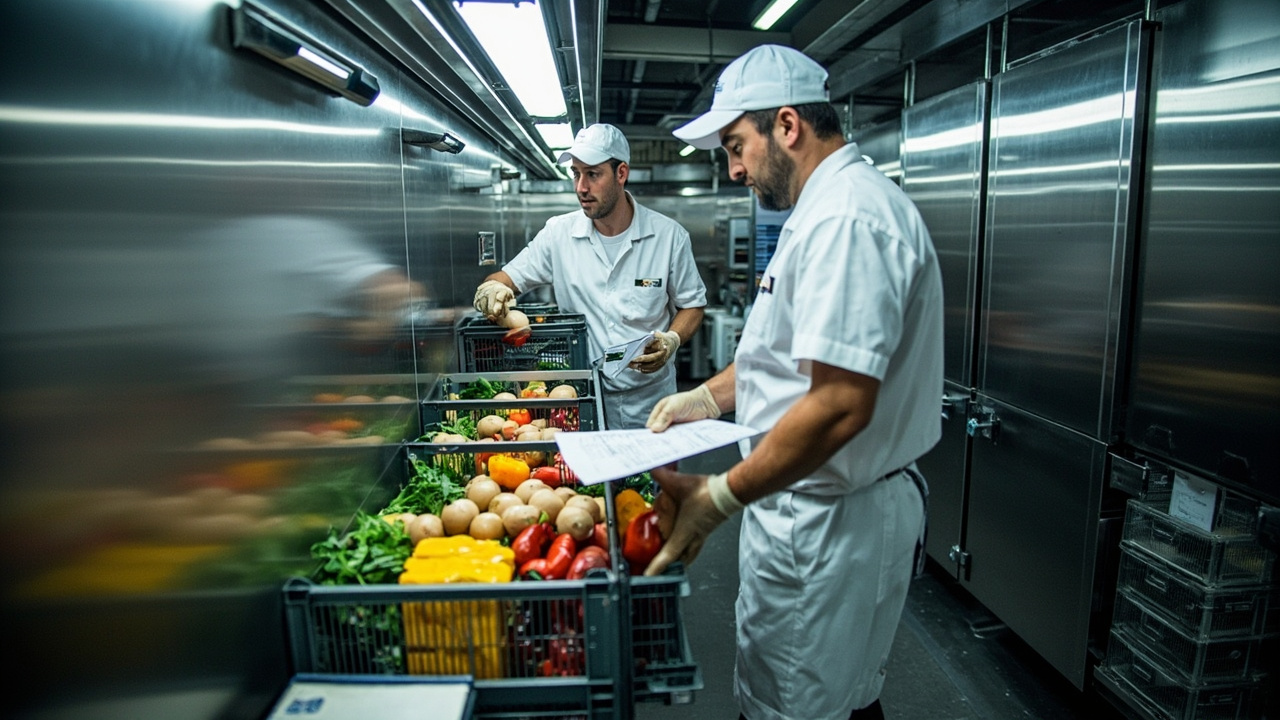
Work collaboratively with trading partners and respected regulatory bodies like the FDA, following their instructions and recommendations, according to FSR magazine. If there is any chance that product has been compromised, pull it from supply and ensure removal from all areas of the restaurant, including walk-ins, prep stations and backrooms.
When supply chains work together — with standardized data, open communication, interoperable systems and coordinated action — they can reduce the fallout of a recall, including reputational damage and loss of consumer trust, according to FSR magazine.
Prioritize health over sales
Consumers increasingly understand that a recall is not a brand failure but an action to keep them safe, according to FSR magazine. They look for evidence that favorite brands make decisions to protect public health. When companies appear to make self-serving decisions, such as working to protect sales despite risks to public safety, the damage can be widespread and potentially irreparable, according to FSR magazine.
Protecting public health must be the primary driver in recall decisions, according to Deli Business. Consumers will not automatically fault a brand for issuing a recall, especially if the company demonstrates proper actions to keep consumers safe, according to Deli Business.
Communicate with transparency and accountability
Be forthcoming, sharing what is known about the issue and what is being done to resolve it, according to FSR magazine. Explain how the restaurant and trading partners are working to prevent future safety breaches. Reiterate commitment to consumer safety.
Take accountability, according to FSR magazine. Arguing with a highly respected regulatory agency is not the right approach, and recalling "under protest" likely means lost credibility with trading partners and consumers. Resisting a recall will likely be far more damaging than any proactive, voluntary recall, according to Deli Business.
Why readiness must be tested before an event
The regulatory baseline is lower than many assume, according to Food Industry Executive on June 25, 2026. Under the FDA's Preventive Controls rule, a facility whose hazard analysis identifies a hazard requiring a preventive control must maintain a written recall plan, with procedures to notify consignees, alert the public when needed, run effectiveness checks and dispose of recalled product. Once a hazard is confirmed, a responsible party must report it to the Reportable Food Registry within 24 hours. The rule does not require any test of that plan.
However, GFSI-benchmarked standards behind SQF, BRCGS and FSSC 22000 certification do require a full mock recall at least annually, according to Food Industry Executive. Under FSMA 204, set to take effect in July 2028, companies handling foods on the FDA's Food Traceability List will need to produce full traceability records within 24 hours of a request, according to Food Industry Executive.
Hospitalizations from recalled food more than doubled in 2024, climbing to 487 from 230 the year before, and deaths rose to 19 from eight, according to Food Industry Executive. While the total number of recalls hardly changed, they caused significantly more harm. In 2024, a Listeria-related recall of frozen waffles and pancakes spread across more than 40 brands and 240 products, according to Food Industry Executive. A Salmonella outbreak tied to cucumbers cascaded into additional recalls of other brands and products that used them.
In a 2025 survey commissioned by GS1 US and cited by Food Industry Executive, 59% of consumers said they are hesitant to buy the same brand again after a recall, rising to 65% among millennials and 64% among Gen Z.
Sources referenced
- How Restaurants Can Maintain Consumer Trust During a Recall - FSR magazine (https://www.fsrmagazine.com/feature/how-restaurants-can-maintain-consumer-trust-during-a-recall/)
- The Importance of Maintaining Consumer Trust During Recalls - Deli Business (https://delibusiness.com/the-importance-of-maintaining-consumer-trust-during-recalls/)