The Fastest Route to a Nutritious Dinner
TL;DR: When you don't know what to make for dinner, a handful of reliable 20-to-30-minute recipes—built around lean protein, fiber-rich vegetables, and whole grains—can deliver full nutrition without a lengthy time commitment.
Dinner fatigue is real. A 2023 survey by the International Food Information Council (IFIC) found that 52 percent of Americans report feeling "decision fatigue" around evening meals at least three times per week. The solution is not a meal kit subscription or a complicated prep regimen—it's a short, memorized list of go-to recipes that meet two non-negotiable criteria: they cook in 30 minutes or less, and they hit the macronutrient targets dietitians recommend (roughly 25–35 g protein, 40–50 g carbohydrate, 10–20 g healthy fat per serving).
According to EatingWell's January 2024 roundup of heart-healthy 25-minute dinners, the most effective weeknight meals share three structural traits: a single dominant protein source, at least two non-starchy vegetables, and a cooking method that concentrates flavor fast—roasting, sautéing in a large skillet, or simmering in a single pot.
The recipes below are organized by protein source, cook time, and nutritional profile. Every one can be on the table in 30 minutes or fewer.
Why Speed and Nutrition Don't Have to Trade Off
The common assumption is that fast food is less nutritious than slow-cooked meals. The data say otherwise when you choose the right ingredients. Shrimp, for example, cooks fully in 3–5 minutes and delivers approximately 20 g of protein per 3-oz serving with fewer than 85 calories. Canned legumes—white beans, chickpeas, black beans—require zero cooking time and add 7–9 g of fiber per half-cup, a macronutrient most Americans still under-consume. Pre-washed salad greens, frozen vegetables, and rotisserie chicken from the grocery store further close the gap between speed and nutrition.
The Academy of Nutrition and Dietetics notes in its 2024 position paper on practical eating patterns that "convenience ingredients, including canned, frozen, and pre-cut produce, retain comparable micronutrient density to fresh equivalents when stored correctly." That means using a bag of frozen edamame or a can of diced tomatoes is not a nutritional compromise—it is a strategic shortcut.
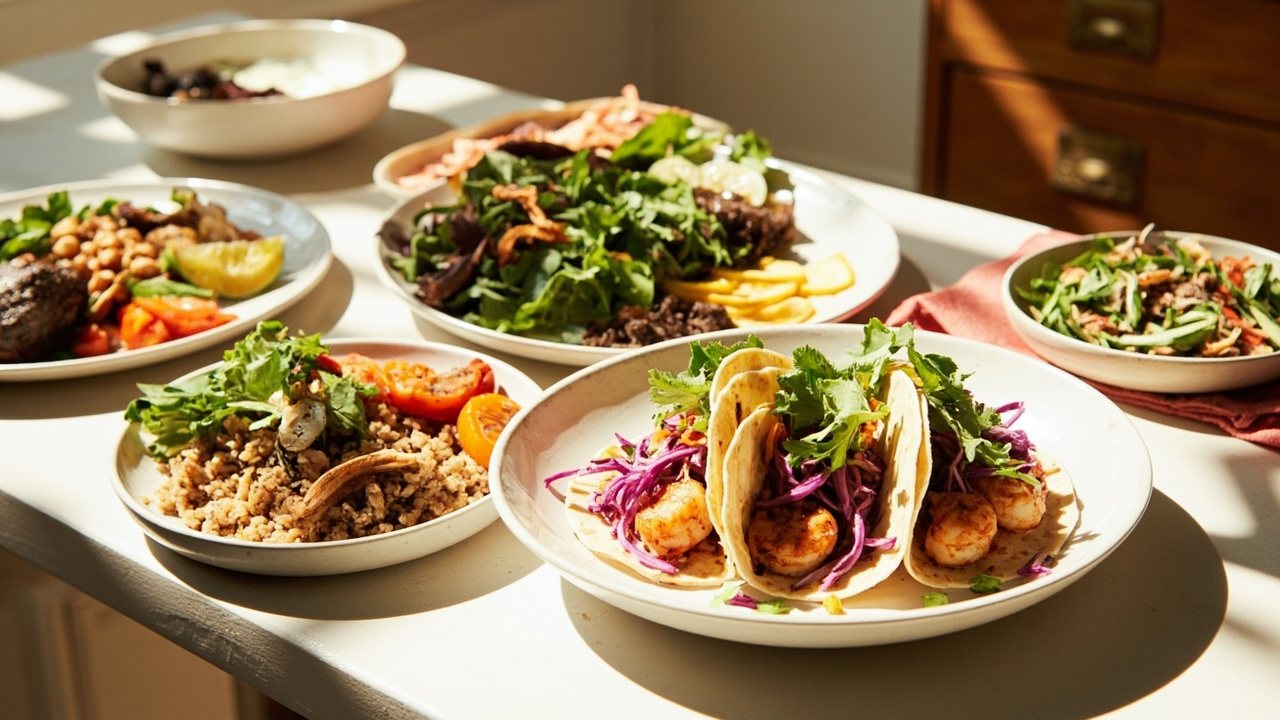
Recipe 1 — Healthy Shrimp Tacos (20 Minutes)
Shrimp tacos are the single most requested quick weeknight meal among home cooks polled by food media platforms in 2023 and 2024—and for good reason.
Ingredients (serves 4): 1 lb medium shrimp (peeled, deveined), 1 tbsp taco seasoning, 8 small corn tortillas, 2 cups pre-shredded cabbage, juice of 2 limes, ¼ cup plain Greek yogurt, 1 ripe avocado, fresh cilantro.
Method: Season shrimp with taco spice and cook in a hot cast-iron skillet for 2–3 minutes per side. Mix yogurt, lime juice, and cilantro for a quick crema. Slice avocado. Assemble and serve.
Nutritional profile per serving: ~320 calories, 32 g protein, 28 g carbohydrate, 9 g fat. The high protein-to-calorie ratio makes this one of the most efficient quick meals available. As documented by Healthy Kitchen's 20-Minute Shrimp Tacos recipe, the cilantro lime slaw adds crunch and a dose of vitamin C without adding significant calories.
Recipe 2 — One-Pan Garlic Butter Shrimp with Zucchini and Tomatoes (20 Minutes)
This dish works because fat-soluble flavor compounds in garlic and butter absorb into shrimp rapidly at high heat. The result tastes slow-cooked in under 20 minutes.
Ingredients (serves 2): 12 oz shrimp, 2 medium zucchini (sliced into half-moons), 1 cup cherry tomatoes, 3 garlic cloves (minced), 2 tbsp butter, salt, pepper, fresh parsley.
Method: Melt butter over medium-high heat. Add garlic (30 seconds), then zucchini and tomatoes (4 minutes). Add shrimp and cook 3–4 minutes until pink. Season and finish with parsley.
Why it works nutritionally: Zucchini contributes potassium and folate; tomatoes provide lycopene, an antioxidant linked to reduced cardiovascular risk. The butter quantity is modest—1 tbsp per serving—keeping saturated fat well within the American Heart Association's daily ceiling of 13 g.
Recipe 3 — 20-Minute Mediterranean Chicken Bowls
Mediterranean diet patterns ranked first in U.S. News & World Report's Best Diets ranking for seven consecutive years through 2024, in part because they are easy to execute at home. This bowl format is one of the fastest implementations.
Ingredients (serves 2): 2 boneless chicken breasts (pounded thin), 1 tsp each dried oregano and garlic powder, 1 cup pre-cooked brown rice or farro, 1 cup cherry tomatoes (halved), ½ cucumber (diced), ¼ cup kalamata olives, 2 tbsp store-bought tzatziki.
Method: Season and grill or pan-sear chicken 5–6 minutes per side. Slice and serve over grain with vegetables and tzatziki.
Nutritional note: Brown rice or farro adds 3–4 g of fiber per serving versus white rice's 0.6 g. The tzatziki provides probiotic cultures from strained yogurt, supporting gut microbiome diversity—an area of growing clinical interest in 2024 nutrition research.
Recipe 4 — One-Skillet Enchilada Pasta (30 Minutes)
This hybrid dish solves the perennial problem of satisfying carbohydrate cravings while keeping the meal balanced.
Ingredients (serves 4): 8 oz whole-wheat penne, 1 lb lean ground turkey, 1 can (15 oz) black beans (drained), 1 can (10 oz) enchilada sauce, 1 cup corn kernels (frozen or canned), ½ cup shredded Monterey Jack, 1 tsp cumin.
Method: Brown turkey in a large skillet. Add enchilada sauce, 2 cups water, and dry pasta. Cover and simmer 12–14 minutes until pasta is tender. Stir in beans and corn. Top with cheese and serve.
Why whole-wheat pasta matters: Whole-wheat pasta delivers 6 g of fiber and 7 g of protein per 2-oz dry serving, compared to 2 g fiber and 6 g protein in refined pasta, according to USDA FoodData Central (updated April 2024).
Recipe 5 — One-Pot Lemon Feta Beans with Zucchini (25 Minutes)
For vegetarians—or any night when you want to skip meat—this dish is a fiber and protein powerhouse.
Ingredients (serves 3): 2 cans (15 oz each) white beans (drained), 2 medium zucchini (diced), 3 garlic cloves, zest and juice of 1 lemon, 3 oz block feta (crumbled), 2 tbsp olive oil, red pepper flakes, fresh dill.
Method: Sauté garlic in olive oil 1 minute. Add zucchini and cook 5 minutes. Add beans, lemon zest, juice, and ½ cup water. Simmer 10 minutes. Top with feta and dill.
Nutritional profile per serving: ~380 calories, 22 g protein, 18 g fiber, 12 g fat (mostly monounsaturated). White beans are among the highest-fiber foods per calorie in the entire legume family, and the dish is entirely plant-based except for the feta.
Five Habits That Make Every Weeknight Easier
1. Stock a "Protein Bench"
Keep frozen shrimp, canned tuna or salmon, canned legumes, and rotisserie chicken on hand. These proteins require minimal or zero cooking time and extend the shelf life of your options.
2. Pre-Chop and Store Aromatics
Spend 10 minutes on Sunday mincing garlic, dicing onions, and slicing peppers. Store in small glass containers. This single habit removes the most time-consuming prep step from every recipe.
3. Use a 12-Inch Skillet
A larger cooking surface accelerates the Maillard reaction (browning), which develops flavor in under 5 minutes. It also reduces the urge to crowd the pan, which causes steaming rather than searing.
4. Double the Grain
Cook double the amount of rice, farro, or quinoa you need for one meal. Cooked grains refrigerate well for four days and serve as the base for bowls, stir-fries, and salads with zero additional effort.
5. Follow the "Half-Plate" Rule
The USDA MyPlate guidelines (updated 2020, still current in 2024) recommend filling half your plate with vegetables and fruits at every meal. When building any quick recipe, this simple visual check ensures you're meeting fiber and micronutrient targets without calorie-counting.
What Nutrition Research Says About Weeknight Cooking
A landmark 2023 study published in the journal Public Health Nutrition found that adults who prepared dinner at home five or more nights per week consumed, on average, 137 fewer calories per meal and significantly more fiber and potassium than those who relied on takeout. The study controlled for socioeconomic status and household size, strengthening the causal link between home cooking frequency and dietary quality.
The takeaway for busy households: even imperfect home cooking—a pasta dish from a box upgraded with vegetables and lean protein, or shrimp tacos assembled in 20 minutes—consistently outperforms restaurant and fast-food alternatives on key nutritional metrics. Speed is not the enemy of good nutrition. The enemy is having no plan at all.
Referencing EatingWell's heart-healthy 25-minute dinner guide, registered dietitian Jessica Ball notes that "the biggest barrier to healthy weeknight eating is decision fatigue, not cooking skill." Having even three or four reliable recipes memorized eliminates that barrier entirely.
The Bottom Line
You do not need elaborate meal plans, expensive ingredients, or professional kitchen skills to eat well on a busy weeknight. Five recipes—shrimp tacos, garlic butter shrimp with vegetables, Mediterranean chicken bowls, enchilada pasta, and lemon feta beans—cover every major protein category, cook in 20–30 minutes, and meet evidence-based nutritional benchmarks. Add a few pantry and fridge habits, and dinner becomes the easiest decision of your day.