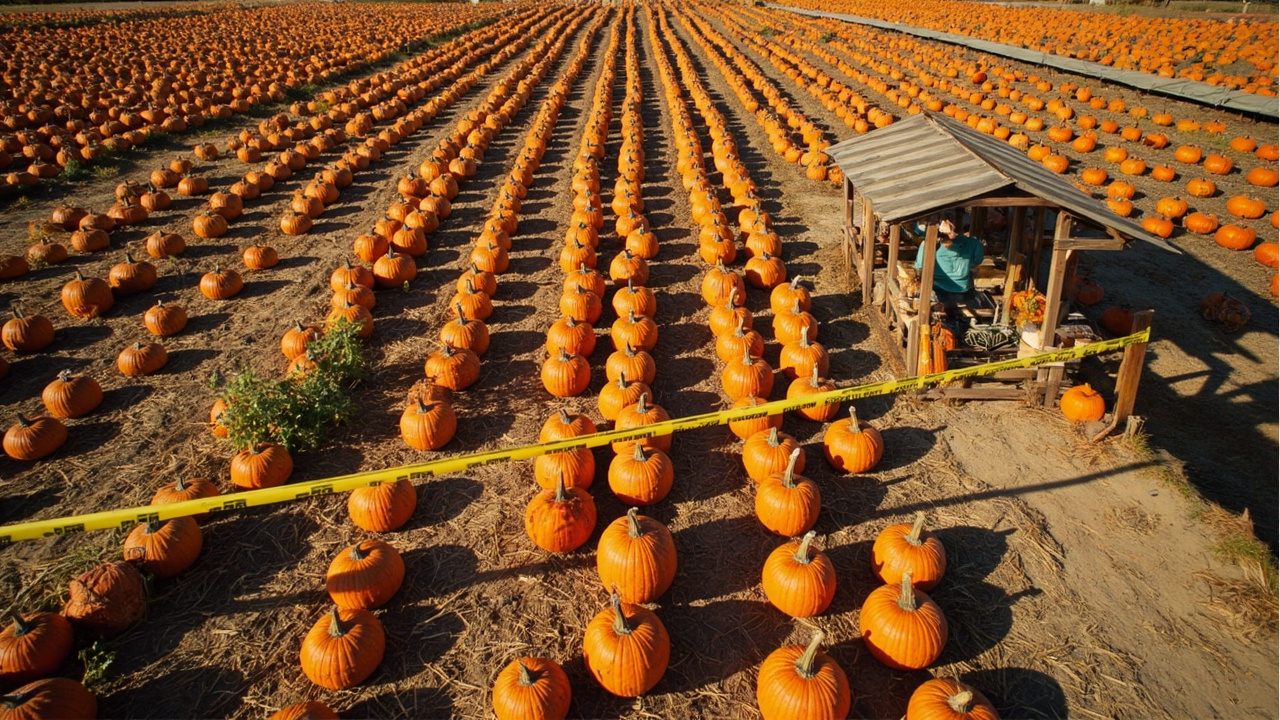
San Luis Obispo County Ends Pumpkin Patch E. Coli Probe
San Luis Obispo County public health officials declared on November 6, 2026, that their investigation into an E. coli O157:H7 outbreak tied to Brookshire Farms is closed, and no ongoing public health threat exists. The conclusion came after five laboratory-confirmed cases and ten additional suspect cases were identified among visitors to the farm, with three children developing hemolytic uremic syndrome (HUS), a potentially life-threatening complication of E. coli infection, according to Food Safety News.
Exposure Window and Case Details
Public health investigators traced the exposure period to October 16 through October 26, 2026. Among the confirmed cases, individuals had visited Brookshire Farms specifically on either October 17 or October 18, 2026, according to Food Safety News. Genetic sequencing was completed on samples from three of the five confirmed patients; those three strains shared a common genetic profile. A fourth test result remained pending at the time officials announced the closure, and testing was not possible for the fifth case.
Critically, the genetic markers from the patient samples did not closely match any strains catalogued in national databases, a finding that suggested the pathogen came from a source particular to the farm rather than from a broader regional or national contamination event, as Food Safety News reported.
Environmental Testing Turned Up No Definitive Source
Despite extensive sampling at Brookshire Farms, investigators could not pinpoint exactly how visitors became infected. Environmental tests covering food items, water sources, and surfaces at the farm did not return positive results for E. coli O157, according to reporting by the San Luis Obispo Tribune. Other bacterial strains and E. coli variants were detected, but none were identified as the outbreak strain.
Investigators noted that multiple items appeared as common exposure points among the sick visitors: edible corn cups, pumpkins, and non-potable water sources on the property. Notably absent from Brookshire Farms was a petting zoo or any farm animals — settings frequently implicated in E. coli O157:H7 outbreaks — the San Luis Obispo Tribune reported. The absence of animals narrowed but did not resolve the question of how contamination occurred.
Three Children Developed Serious Complications
Hemolytic uremic syndrome, the severe kidney-damaging condition that developed in three of the confirmed child patients, is a recognized complication of Shiga toxin-producing E. coli (STEC) infections. HUS can cause kidney failure and requires hospitalization. County Health Officer Dr. Christy Mulkerin acknowledged the gravity of the situation, saying, "Our hearts go out to the families affected by this outbreak," according to Food Safety News. Dr. Mulkerin added that the county thanks everyone who helped protect the community during the response.
Brookshire Farms Reopened Before Official Closure Announcement
Brookshire Farms had voluntarily closed on October 27, 2026, as a precautionary measure shortly after health officials began their investigation. The farm reopened to the public just hours before the county's formal announcement on November 6, 2026, the San Luis Obispo Tribune reported. Farm owners stated that their own recent tests and environmental samples had returned negative results for the outbreak strain and encouraged the public to return.
Dr. Mulkerin's formal declaration aligned with the farm's own findings: "Based on the findings of our investigation, we believe the risk of additional exposure associated with this incident has passed, and there is no longer an ongoing public health threat," according to Food Safety News.
Why Pumpkin Patches Carry E. Coli Risk
Agri-tourism venues such as pumpkin patches present recurring food safety challenges. Visitors come into contact with soil, produce, shared surfaces, and sometimes untreated water — all potential vectors for STEC transmission. Even without on-site animals, the pathogen can survive in soil and water and can contaminate produce at or near ground level. The fact that no petting zoo was present at Brookshire Farms makes the investigation's inconclusive environmental results notable and highlights a gap in current detection methods for farm-based outbreaks.
The San Luis Obispo County Department of Public Health reiterated general hygiene guidance in connection with the case closure. Officials emphasized hand-washing after outdoor activities, washing produce before eating, keeping raw items separated during food preparation, and avoiding untreated water sources.
Investigation Context: STEC Outbreaks at Farm Venues
The Brookshire Farms outbreak fits within a broader pattern of STEC events at farm-visit venues across the United States. Shiga toxin-producing strains of E. coli — particularly O157:H7 — are recognized as among the most dangerous foodborne pathogens because of their low infectious dose and their potential to cause HUS, especially in young children. County and state health departments typically activate investigation protocols quickly when multiple HUS cases are reported in geographic proximity, as occurred here.
The San Luis Obispo County Public Health Department published updates on its investigation through the county's official communications channels, documenting the Shiga toxin-producing E. coli (STEC) outbreak investigation at each stage, from initial alerts through the November 6 closure statement.
What Remains Unresolved
Despite the official closure, the precise contamination source at Brookshire Farms was never confirmed. Environmental samples did not yield E. coli O157, the fourth patient's genetic test was still pending when the investigation closed, and the strain's absence from national databases leaves epidemiologists without a clear trail to follow. Health officials stated the closure reflects the end of the active exposure window rather than a complete scientific resolution of how the pathogen entered the farm environment.
For visitors to agri-tourism venues this season and beyond, the case serves as a concrete reminder that farm environments carry microbial hazards that routine hygiene practices can help mitigate, even when the specific source of an outbreak remains unidentified.
Sources referenced
- County closes investigation into pumpkin patch linked to E. coli outbreak | Food Safety News (https://www.foodsafetynews.com/2026/11/county-closes-investigation-into-pumpkin-patch-linked-to-e-coli-outbreak/)
- SLO County says E. coli outbreak is no longer a public threat | San Luis Obispo Tribune (https://www.sanluisobispo.com/news/health-and-medicine/article317968130.html)