TL;DR: Federal food safety officials warned diners in California, Texas and Florida about beef kofta previously served at The Kebab Shop after product samples tested positive for E. coli O157:H7 during a California illness investigation.
The U.S. Department of Agriculture's Food Safety and Inspection Service issued a public health alert on May 24, 2026, for beef kofta served at The Kebab Shop restaurant locations over possible contamination with Shiga toxin-producing E. coli O157:H7, according to the Food Safety and Inspection Service.
No recall was requested because the menu item was no longer available for purchase, according to the Food Safety and Inspection Service. The agency said The Kebab Shop had stopped selling beef kofta at every restaurant location on May 18, 2026.
The alert identified the product as raw ground beef produced by Olympia Food Industries, Inc., doing business as Olympia Foods, Establishment 18743, in Franklin Park, Illinois, on January 6, 2026. That production lot was supplied to The Kebab Shop locations in California, Texas and Florida.
Federal officials said the concern emerged during an active outbreak inquiry. The Food Safety and Inspection Service, the California Department of Public Health and local health departments in California were examining a localized cluster involving nine ill people in California. Illness onsets extended from March 27, 2026, to April 30, 2026, as reported through May 24, 2026.
Because reported illnesses were confined to California, the California Department of Public Health was leading the investigation with participation from the Food Safety and Inspection Service. Federal officials said they were continuing to inform federal partners as work proceeded.
Laboratory findings were central to the federal action. The Food Safety and Inspection Service said it collected samples of raw ground beef kofta that returned positive results for E. coli O157:H7. Additional analysis was underway to determine whether those product isolates matched the outbreak strain.
The agency said the alert was intended to make sure consumers in the three receiving states knew about the investigation. Contact information was provided for The Kebab Shop and for federal food-safety assistance.
What prompted the May 24 federal alert
The federal notice described an outbreak-linked product concern rather than a retail recall. Investigators had connected illness interviews, patient testing and product sampling around one restaurant menu item.
According to the Food Safety and Inspection Service, the problem was found through an ongoing illness investigation. Nine California illnesses were under review jointly by federal, state and local agencies.
Food Safety News reported on May 22, 2026, that California officials, local health departments and federal partners were investigating an E. coli O157:H7 outbreak associated with beef kofta served at several California locations of the chain. That report said interviews with ill people pointed to grilled beef kofta as the likely source.
That earlier state update, summarized by Food Safety News, counted nine California residents infected with the outbreak strain as of May 19, 2026. Reported onsets in that update also spanned March 27 through April 30.
The restaurant company cooperated with investigators and voluntarily paused sales of grilled beef kofta at all locations, Food Safety News reported. The company action date cited by both federal and state accounts was May 18.
Which product and locations were named
The federal alert gave a single production origin for the implicated kofta. It was characterized as a raw, non-intact ground beef item made January 6, 2026, by Olympia Food Industries in Franklin Park.
The establishment number listed was M18743+P18743, identified in the federal notice as Est. 18743. The company name appeared as Olympia Food Industries, Inc., doing business as Olympia Foods.
Distribution described in the federal notice covered The Kebab Shop restaurant locations in three states: California, Texas and Florida. No retail package or lot code for home purchase was listed because the product was prepared and served in restaurants.
The Kebab Shop said Olympia Foods was no longer its supplier, according to the company's food-safety page. The company said the raw ground beef kofta supplied by Olympia Foods had produced positive E. coli testing results obtained by the Agriculture Department.
State investigators said available information indicated the implicated beef had been distributed only to The Kebab Shop, according to Food Safety News. That assessment was described as current information while product testing, case monitoring and source tracing continued.
How many illnesses were reported
The federal alert listed nine sick people in California. Onset dates ranged from March 27, 2026, to April 30, 2026.
A California Department of Public Health notice summarized by Food Safety News provided additional clinical detail. Six illnesses were in children. Five people had been hospitalized, and two had developed hemolytic uremic syndrome. No deaths had been reported.
No illnesses outside California were linked to the outbreak in the accounts available by May 24. Food Safety News reported that no people from other states were currently linked. The company's May 24 update likewise said both the California Department of Public Health and the Agriculture Department had confirmed no reported cases outside California possibly connected with the event.
The investigation remained open. State officials said they continued to look for the contamination cause, watch for additional ill people and conduct product testing, according to Food Safety News. Federal officials said further testing was underway on the product samples that had tested positive.
Why officials issued an alert instead of a recall
A recall was not requested because the product was no longer available for purchase, the Food Safety and Inspection Service said. In that circumstance, the agency uses a public health alert to notify consumers who may have already eaten the food or kept leftovers.
The restaurant had already removed the item nationally six days earlier. The May 18 nationwide removal meant the exposure risk was not considered ongoing at the time of the federal notice.
Food Safety News likewise reported that exposure risk was not ongoing. The stated reason was the voluntary pause on grilled beef kofta sales at all locations.
The alert therefore focused on awareness in California, Texas and Florida, the states that received the January production. It asked people who ate the dish and became ill to seek care and asked holders of leftovers to throw them away.
What E. coli O157:H7 can do
E. coli O157:H7 is described by federal officials as a potentially deadly bacterium. It can cause dehydration, bloody diarrhea and abdominal cramps two to eight days after exposure, with three to four days the average interval.
Most people recover within a week, the federal notice said. Food Safety News gave a similar recovery range of five to seven days for most patients.
A subset of patients develops hemolytic uremic syndrome, a form of kidney failure. Federal officials said the condition can occur at any age but is most common in children younger than five and in older adults. Warning signs listed included easy bruising, pallor and decreased urine output.
Food Safety News reported that about 5 to 10 percent of people diagnosed with E. coli infections develop hemolytic uremic syndrome. Its account listed fever, abdominal pain, feeling very tired, decreased frequency of urination, small unexplained bruises or bleeding, and pallor as symptoms.
Many people with the syndrome recover within a few weeks, but some experience lasting injury or death, according to Food Safety News. The same report said the condition is most common in children younger than five because of immature immune systems, in older adults because of deteriorating immune systems, and in people with compromised immune systems such as cancer patients.
Contaminated food does not look, smell or taste bad, Food Safety News noted. Specific laboratory tests are required for diagnosis, and infection can resemble other illnesses.
People with syndrome symptoms should seek emergency medical care immediately, Food Safety News reported. Hospitalization is likely because the condition can lead to hypertension, chronic kidney disease, brain damage and neurologic problems.
What diners should do now
Federal officials advised anyone who ate beef kofta from any The Kebab Shop location and develops infection symptoms within 10 days of exposure to contact a health care provider. Consumers should discard any leftover beef kofta obtained from the restaurants.
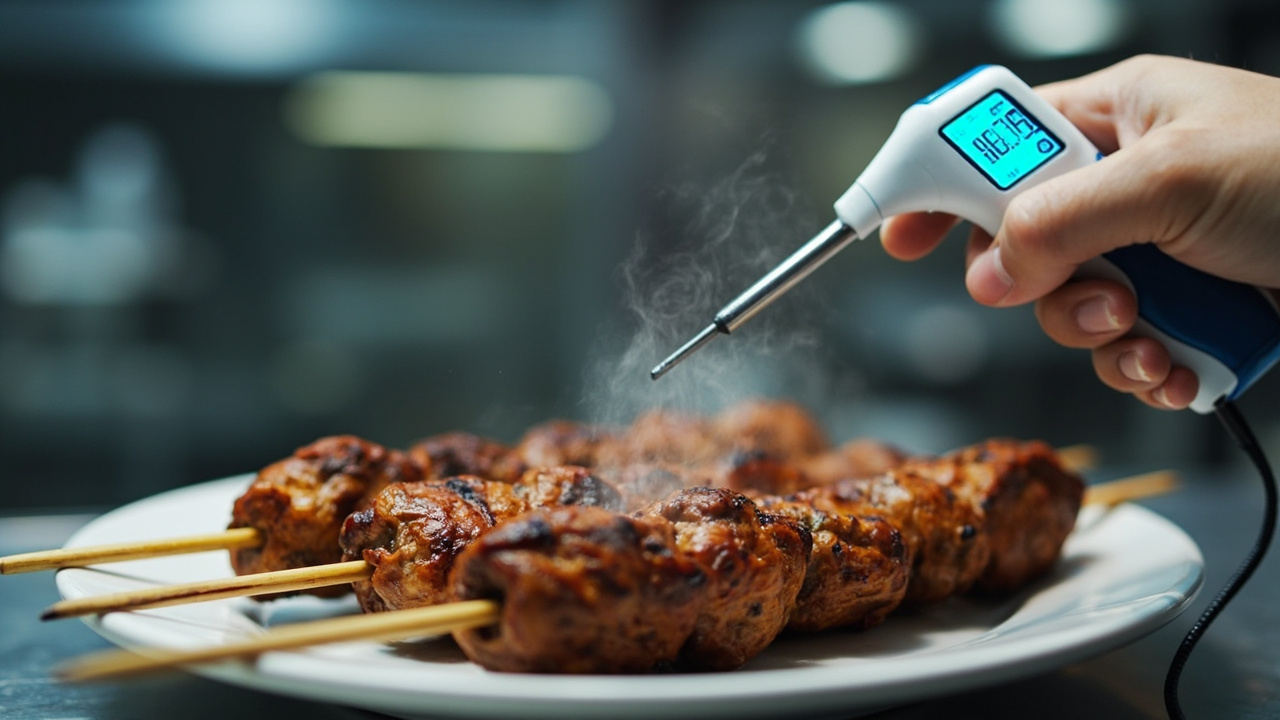
The agency also restated general ground-beef guidance: cook all ground beef products to an internal temperature of 160 degrees F, checked with a food thermometer. Additional temperature information was referenced at the agency's safe-temperature chart.
The Kebab Shop directed guests to its customer-service line at 888-965-5821 and to [email protected], according to the federal notice. The company website listed hours of 9 a.m. to 5 p.m. Pacific time Monday through Friday in one update, and broader Memorial Day weekend availability in its chief executive's message.
Consumers with food-safety questions can call the USDA Meat and Poultry Hotline at 888-MPHotline, or 888-674-6854, or email [email protected]. Problems with meat, poultry or egg products can be reported through the online Electronic Consumer Complaint Monitoring System, available 24 hours daily.
The investigation agencies asked people who ate at the implicated restaurants and developed symptoms to seek medical attention and inform the clinician about possible bacterial exposure, according to Food Safety News. The company asked anyone with symptoms to seek medical attention and contact the California Department of Public Health.