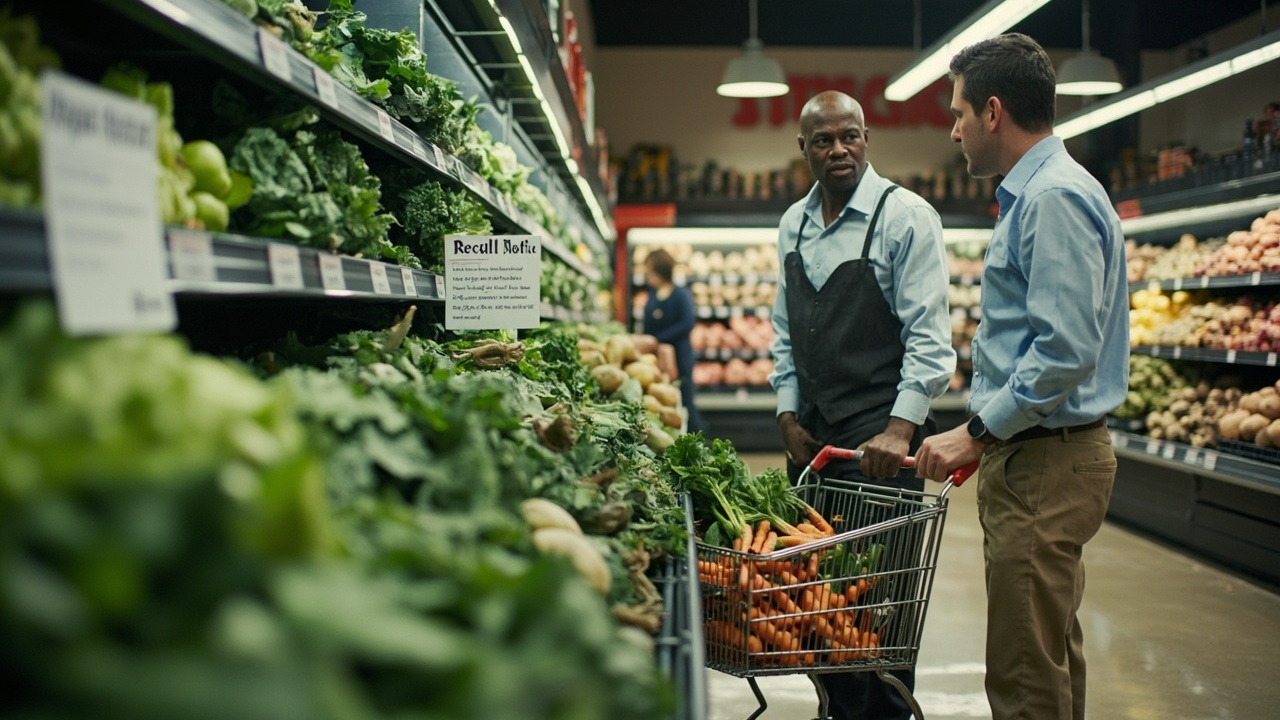
TL;DR: Ask before a recall happens who handles recalls, how alerts arrive, and how buyers are notified.
According to Food Safety News, shoppers do not need to wait for an emergency to learn whether their store is prepared for a food recall. A brief, curious talk with a store manager or department manager can reveal whether the business has a clear plan, who carries it out, and how customers who already bought a product will learn about the danger. That guidance was published on June 30, 2026, by Roger Hancock, and it centers on five direct questions every shopper can use.
The context is scale. According to Food Safety News, an average of 600 food and beverage recalls are issued in the U.S. each year. Because recalls are frequent, the article says consumers are better protected when they understand in advance how their own store receives recall information, removes products, and contacts buyers. Knowing the expected channel — sign, website post, loyalty-program message, text or email — helps a household act faster when time matters.
1. Is there a person in charge of recalls?
Why ownership matters at store level
The first recommended question is whether someone in the store is responsible for managing recalls. According to Food Safety News, every store should have a designated person or role overseeing recalls.
That point is about accountability rather than titles. If a named employee or defined role owns the task, notices are less likely to sit unread in a general inbox or wait for a corporate memo to be interpreted. If no one owns it, follow-through can slip during a busy shift. Shoppers are advised to approach the topic with curiosity rather than confrontation, presenting themselves as regular customers who want to understand how the store looks out for them.
2. How does the store learn that a product is recalled?
What a confident answer sounds like
The second recommended question is how the store finds out when a product it carries has been recalled. According to Food Safety News, shoppers should look for a confident, specific answer, such as notification by a supplier or use of a recall management system.
Specificity is the test. A store that can name its source and describe the flow of information shows that alerts have a defined path from manufacturer, supplier, or system to the shelf. A vague description suggests the store may learn about recalls inconsistently, for example only from news coverage or customer reports. The article notes that a solid process allows staff to answer without hesitation.
3. How fast do recalled foods leave the shelf?
Why a timeframe signals readiness
The third recommended question is how quickly recalled products get pulled from shelves once the store is notified. According to Food Safety News, a store with a good process can give a timeframe.
Speed matters because retailers are described as a critical link in keeping contaminated products out of consumers' hands. A store that states its removal window — who pulls product, who checks back stock, and who verifies the action — demonstrates that removal is a procedure rather than an intention. The recent record shows why removal cannot wait. According to the FDA, La Ceiba Foods Latin Market Inc. announced on June 26, 2026, a recall of Requesón Salvadoreño and Requesón Mexicano products because of possible contamination with Listeria monocytogenes.
4. How will you tell customers who already bought it?
Look beyond the sign on the door
The fourth recommended question is how the store lets customers know about a recall, especially people who already bought the product. According to Food Safety News, shoppers should look for answers that go beyond in-store signage, such as use of loyalty programs and posting on the store website or social media.
In-store signs help visitors who have not yet purchased, but they do not reach households where the food is already in a refrigerator. That gap is why direct outreach matters. Loyalty-program records, website notices, and social posts can reach past buyers more reliably. The article says the best outcome is a genuine conversation that leaves the customer better informed and comfortable that the store has reliable processes to handle recalls promptly and properly.
5. Will the loyalty program contact me directly?
Enrollment and updated contacts make alerts work
The fifth recommended question is whether enrollment in the loyalty program will bring a direct notification if something the shopper bought gets recalled. According to Food Safety News, the answer should be yes, with a clear explanation of how it works.
The practical follow-through falls partly on the shopper. According to Food Safety News, customers who want recall information through loyalty programs should sign up for those programs and keep contact information updated so text or email notifications arrive immediately when a recall occurs. An outdated phone number or email address can defeat an otherwise strong store system. Shoppers who understand the trigger — purchase history matched to a recalled lot — know what to expect and what to check.
What vague answers may mean
Hesitation points to process gaps
According to Food Safety News, vague answers, deflection, or "I don't know" are not necessarily red flags, but they may indicate gaps in process. Stores that cannot answer basic recall questions may not have systems to act quickly when something goes wrong.
The article adds that the shortfall is not necessarily the local staff's fault and could stem from recall protocol at the corporate level. Still, it advises shoppers to weigh what they hear. If a store seems unprepared to handle a product recall and unable to quickly notify customers when one occurs, the article says shoppers may want to rethink where they shop. Consumer curiosity, in that framing, is also pressure for accountability and improvement at the retail level.
How to check whether your food is included
Match batch, lot, and sell-by details
When a recall is announced through a grocery store, government organizations, or the news, notifications will include product identifiers. According to Food Safety News, those identifiers include batch numbers, lot numbers, and sell by dates.
Shoppers should compare those identifiers on items they purchased to determine whether those products are part of the recall. Companies are increasingly disseminating recall information and updates via QR codes on product packaging, so the article says it is worth checking the label to see if that resource is available. In the late-June cheese case, identification was highly specific. According to the FDA, the La Ceiba Foods recall included La Colonia Salvadoreno Requeson Soft Ricotta Cheese in 14 oz with UPC 736846383099, Selectos Latinos Requeson Salvadoreno Ricotta Style Salvadorean Style Cheese in 16 oz with UPC 767787984526, Selectos Latinos Requeson Mexicano Mexican Cottage Cheese in 16 oz with UPC 767787984519, and Clover Hill Buket of Requeson in 18 lb, all distributed May 11, 2026 to June 1, 2026, with EXP date July 10, 2026.
What to do with a recalled product
Return, discard, and do not try to salvage it
If a purchased item matches a recall, shoppers should follow the recalling company's instructions. According to Food Safety News, that means disposing of the items or returning them to the grocery store for a refund.
If instructions are unclear, the article says to contact the retailer or the recalling company's customer support team. It also says not to eat a recalled product or serve it to others, and that rinsing or cooking contaminated foods will not make them "safer." In the La Ceiba Foods case, the FDA notice told consumers not to consume, sell, or serve the recalled products and said products must be returned to the place of purchase for a full refund. Questions were directed to the Southern Maryland Agricultural Development Commission, on behalf of Clover Hill Dairy, at 240-528-8850 extension 327, Monday through Friday, 8:00 a.m. to 4:30 p.m. Eastern time.
When illness follows a recalled food
Call a clinician and describe food and symptoms
If a person ate a recalled item and feels ill, medical advice is needed. According to Food Safety News, the person should contact a healthcare professional and explain what was eaten and the symptoms being experienced, and the clinician will provide guidance about next steps.
The warning is especially relevant for Listeria monocytogenes. According to the FDA, Listeria monocytogenes is a bacterium that can cause serious and sometimes fatal infections in young children, older adults, pregnant women, and people with weakened immune systems, while healthy people may have short-lived symptoms such as high fever, severe headache, stiffness, nausea, abdominal pain, and diarrhea, and infection can also lead to miscarriages and stillbirth in pregnant women. The FDA notice said the affected cheese products were distributed to supermarkets, retail stores and restaurants in Maryland, Virginia and Washington, D.C., and that the recall included all lots and batches within expiry.
Why the recall chain is under strain
Supplier notice triggered the June cheese recall
Retail readiness depends on upstream signals. According to the FDA, La Ceiba Foods initiated its recall after being notified of a recall action by its supplier, Clover Hill Dairy, following identification of possible contamination with Listeria monocytogenes in products manufactured at the facility.
The broader investigation widened concern. According to the FDA, the FDA and CDC, in collaboration with state and local partners, are investigating a multi-state, multi-year outbreak of Listeria monocytogenes infections linked to requeson, a soft cheese like ricotta, manufactured by Clover Hill Dairy LLC of Mechanicsville, Maryland, with twelve illnesses and one death reported to date. That sequence shows why the store questions matter: a supplier alert must move quickly into shelf removal and buyer notification before additional exposures occur.
Why asking helps the whole community
Engaged shoppers signal that safety counts
According to Food Safety News, shoppers do not have to be activists to push for better food safety. Engaged customers asking reasonable questions can help keep the community safer and more informed.
The article says the conversation with a store manager is not only for personal peace of mind because it signals to the store that customers are paying attention and expect accountability. Retailers are described as usually responsible for keeping contaminated products out of consumers' hands, so informed curiosity helps protect the asker's family as well as other shoppers. The piece identifies its author as Roger Hancock, CEO of Recall InfoLink, a company whose work spans retail, tech, data, regulatory, and supply chain, and as a steering committee member of the Alliance for Recall Ready Communities. The closing message is that the food safety system works better when consumers are paying attention, starting with knowing what to ask.
Sources referenced
- Five questions to ask your grocery store about food recalls | Food Safety News (https://www.foodsafetynews.com/2026/06/five-questions-to-ask-your-grocery-store-about-food-recalls/)
- La Ceiba Foods Latin Market Inc. Recalls Cottage Cheese Products Because of Possible Health Risk | FDA (https://www.fda.gov/safety/recalls-market-withdrawals-safety-alerts/la-ceiba-foods-latin-market-inc-recalls-cottage-cheese-products-because-possible-health-risk)