TL;DR: Termites Can Eat Wood Because of Their Gut Microbes — and Science Is Trying to Copy That Trick
Humans cannot digest wood because we lack the enzymes to break apart lignin, the rigid polymer that gives trees their strength. Termites solve this problem with a dense community of gut bacteria, archaea, and protists that collectively produce those enzymes — and as of 2025, researchers at multiple institutions are actively working to translate that microbial machinery into biotechnological tools for food, feed, and drug delivery. A January 2025 review published in Symbiosis by Ihejirika et al., titled "Biotechnological utilization: the potential role of the termite gut symbiotic microbiome," confirms that termite gut microbiota remain one of the most promising but under-exploited biological systems in applied microbiology (source: Springer Nature, https://link.springer.com/article/10.1007/s13199-025-01053-2).
What Is Lignin, and Why Is It So Hard to Eat?
Lignin is a complex, cross-linked aromatic polymer that accounts for roughly 15–30% of the dry weight of most terrestrial plants and approximately 44% of total plant biomass on Earth. It is the second most abundant organic polymer on the planet after cellulose. Its job in the plant is structural: lignin binds cellulose fibers together like biological concrete, making cell walls rigid and water-resistant.
That same toughness is what makes lignin biologically resistant to digestion. Most organisms — including humans — lack the oxidative enzymes (laccases, peroxidases, and related ligninases) needed to cleave lignin's carbon–carbon and ether bonds. The human gut can ferment some cellulose via colonic bacteria, but lignin passes through almost entirely intact, classified by nutritionists as an insoluble dietary fiber with negligible caloric yield.
For context: a single mature tree may contain hundreds of kilograms of locked-up carbon and chemical energy that human metabolism simply cannot access. That is the frustrating gap that termite microbiome research is trying to close.
How Termites Actually Digest Wood: A Three-Stage Microbial Assembly Line
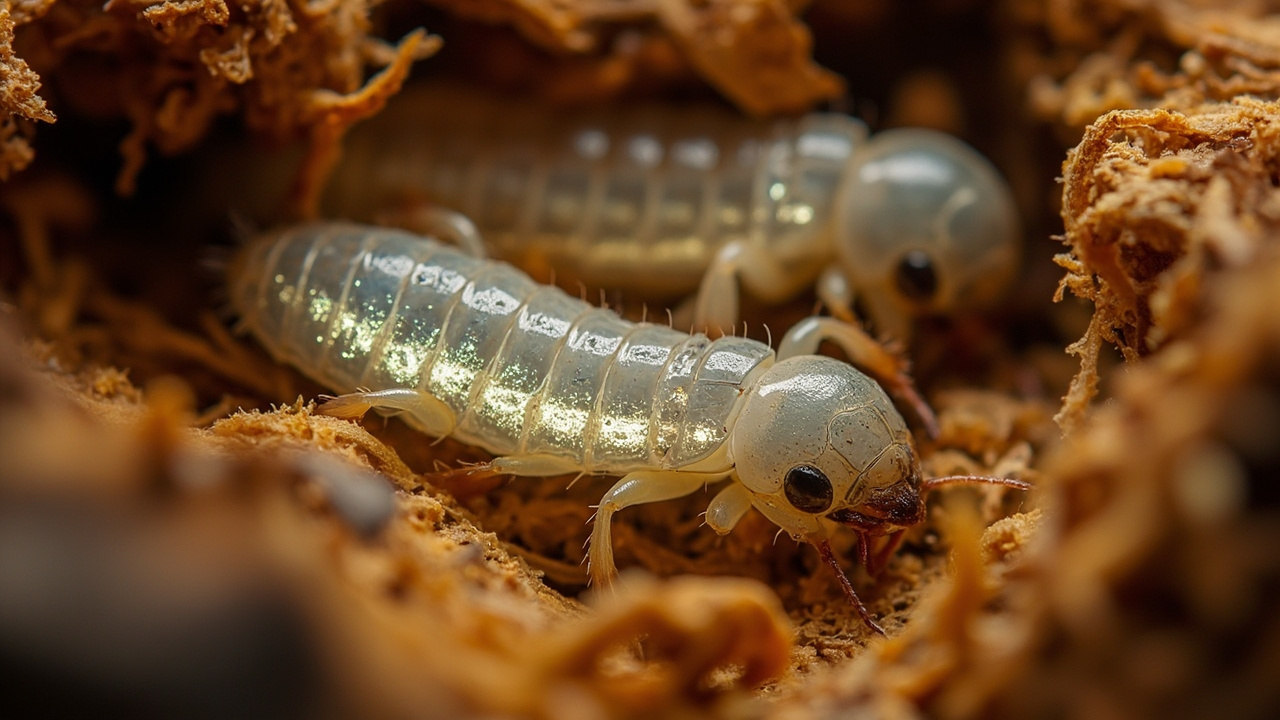
A termite's hindgut is one of the most microbe-dense environments on Earth, hosting up to 10,000 bacteria per cubic millimeter alongside anaerobic protists and methanogenic archaea. The system works in stages:
- Mechanical pre-processing. Worker termites chew wood, dramatically increasing surface area.
- Fungal or bacterial pre-treatment (species-dependent). Some species — notably the fungus-farming Macrotermes — cultivate Termitomyces fungi that partially degrade lignin before the wood reaches the worker's gut.
- Hindgut fermentation. Specialized anaerobes, including Treponema and Fibrobacter relatives, attack remaining cellulose and hemicellulose. Separately, laccase-producing bacteria partially depolymerize lignin into smaller aromatic fragments that can be further oxidized.
A landmark 2020 study published in Communications Biology (Nature Portfolio) — "Integrative omics analysis of the termite gut system adaptation to Miscanthus diet identifies lignocellulose degradation enzymes" — catalogued dozens of previously unknown carbohydrate-active enzymes (CAZymes) expressed in the termite gut when the insects were fed Miscanthus, a high-lignin energy grass. The authors identified novel glycoside hydrolases and auxiliary activity enzymes directly linked to efficient lignocellulose breakdown (source: Nature, https://www.nature.com/articles/s42003-020-1004-3). That enzyme catalogue has since become a reference library for biotech companies searching for industrial biocatalysts.
Why Scientists Haven't Already Solved This
If termites can do it, why isn't there a lignin-digesting food supplement on pharmacy shelves? Several hard scientific and engineering problems explain the delay:
Enzyme oxygen sensitivity. Many of the most powerful lignin-degrading enzymes are produced by white-rot fungi and require free oxygen — but the termite hindgut is strictly anaerobic. Recreating efficient aerobic lignin degradation at the scale and temperature needed for food processing is non-trivial.
Product toxicity. Partial lignin degradation releases aromatic compounds including phenols and aldehydes, some of which are cytotoxic at high concentrations. Any food-grade process must either fully mineralize these intermediates or detoxify them.
Regulatory hurdles. Novel food ingredients derived from biotechnological lignin processing face lengthy safety reviews under frameworks like the EU's Novel Food Regulation and the FDA's GRAS pathway.
Economic incentives. Industry has historically found it cheaper to simply discard lignin (it is burned for energy in most paper mills) than to invest in the complex biochemistry needed to valorize it nutritionally.
None of these are insurmountable — and several are now being tackled directly.
What Lignin Actually Offers Human Health (Even Without Full Digestion)
Lignin is not entirely wasted even in its current undigested form. A 2023 review in Industrial Crops and Products documented multiple bioactive functions of lignin polyphenols in the gut: potent antioxidant activity, antimicrobial effects against pathogens like E. coli and Salmonella, and prebiotic-like modulation of the gut microbiome that promotes Bifidobacterium and Lactobacillus growth (source: ScienceDirect, https://www.sciencedirect.com/science/article/abs/pii/S0926669023014619).
Lignin nanoparticles — produced by chemically depolymerizing lignin in controlled conditions — have shown particular promise as drug and nutrient delivery vehicles. Their natural amphiphilic structure allows them to encapsulate both hydrophilic and hydrophobic compounds, potentially improving bioavailability of vitamins and phytochemicals.
In practical dietary terms, whole cereal lignin (from wheat bran, for instance) is already associated with reduced colorectal cancer risk in epidemiological studies, likely through its microbiome-modulating effects. This is lignin providing health value without being digested — a meaningful distinction.
The Frontier: Engineering Termite-Inspired Gut Microbiomes
The January 2025 Symbiosis review by Ihejirika et al. maps the most promising biotechnological applications explicitly: synthetic biology approaches that transplant termite-derived enzyme genes into food-safe microbial hosts (such as Bacillus subtilis or Saccharomyces cerevisiae), fermentation systems that use termite gut consortia to pre-process agricultural waste into digestible sugars and bioactive compounds, and precision prebiotic formulations designed to enrich the human gut microbiome with lignin-degrading Actinobacteria already present at low levels in healthy adults.
Researchers at the University of Illinois Urbana-Champaign and at the DOE's Joint Genome Institute have contributed large-scale metagenomic datasets from termite guts to public databases, accelerating enzyme discovery globally. As of 2024, the CAZy database lists over 400 characterized lignocellulose-active enzyme families, many first identified in insect gut studies.
The practical horizon for food applications is probably 10–20 years, contingent on regulatory acceptance of novel fermentation-derived ingredients. The horizon for prebiotic applications — using mildly depolymerized lignin fractions to feed beneficial gut bacteria — is considerably shorter, with several startups already in early human trials as of early 2025.
What You Can Do Right Now
While full "wood-eating" biotechnology remains years away, the underlying science already has actionable implications:
- Eat more whole grains and legumes. These are the richest accessible dietary sources of mixed plant lignins, delivering the documented antioxidant and prebiotic effects without any processing.
- Don't fear insoluble fiber. The fraction of lignin that passes intact through your colon is doing structural and immunological work, feeding the right bacteria and binding bile acids.
- Watch the fermentation food space. Kombucha SCOBYs and some artisan sourdough starters have measurable ligninolytic activity — early hints of the kind of microbe-assisted lignin breakdown that may eventually be engineered into functional foods.
The Bottom Line
The reason humans cannot eat wood is enzymatic: we lack the oxidative machinery that termite gut microbes produce in abundance. Science does understand this gap clearly — the 2020 Communications Biology enzyme atlas and the 2025 Symbiosis biotechnology review both confirm how detailed that understanding has become. What remains is the hard engineering work of translating termite biochemistry into safe, scalable, regulatory-approved food technologies. That work is underway, driven by sustainability pressure to valorize the 44% of plant biomass currently locked in lignin and left unused. The termites figured this out 250 million years ago. Humans are, characteristically, taking a bit longer.